Free Digital Signage Software: An Honest Roundup of What's Actually Free
Free digital signage software compared honestly — Anthias, Xibo, PosterBooking, OptiSigns and ChannelOS, and exactly what each free tier costs you in time, screens or limits.
Search for free digital signage software and most of what comes back is a 14-day trial with the word “free” on the button. This is a roundup of the tools that are genuinely free to keep using — five of them — and a plain account of what each one charges you instead of money. Because they all charge something: your evenings, a Raspberry Pi per screen, a cap on how many screens are free, or the vendor’s mark on your board.
We make one of these, so read the ChannelOS section with the appropriate squint. The other four are here because they are real answers for real situations, and two of them beat us outright on the axis most people mean when they say “free”.
What “free” actually means in free digital signage software
Three different things wear the same word, and telling them apart saves an afternoon.
Free software you host. Anthias and Xibo’s CMS are open-source. No licence fee, ever, for any number of screens. The bill arrives as labour: a machine to run it on, updates to apply, backups to take, and a thing to fix when it stops.
A permanent free tier. OptiSigns and ChannelOS keep a free plan running indefinitely, capped by screen count and feature set rather than by a countdown, and a free ChannelOS screen also shows a ChannelOS banner along the bottom of the screen that any paid plan removes. PosterBooking has a $0 plan too, though its pricing card also mentions a 3-month free trial, so check its current terms.
A free trial. Not free. Excluded from this list on principle, however generous the fourteen days.
Anthias (formerly Screenly OSE): free software, paid in your own time
Anthias is the open-source project that used to be Screenly OSE, still maintained by Screenly. You flash it onto a Raspberry Pi, plug the Pi into the TV, and manage the loop from a small web interface served by that Pi.
What it does well. It is genuinely simple and it is genuinely free. Images, videos and web URLs in a playlist, with optional start and end dates per asset. It has been running on shop and office walls for a decade, and because everything sits on the Pi it keeps playing when the network wobbles.
What it costs you. A Raspberry Pi, an SD card and a mount per screen, plus the flashing. There is no design tool at all — Anthias plays finished artwork, so something else has to make it. And each Pi is its own island: manage three screens and you are visiting three separate web interfaces, with no shared schedule and no single view of the wall. It suits one or two screens tended by someone who enjoys tending them.
Xibo: the most capable free CMS, if you will run the server
Xibo’s CMS is free and open-source under AGPLv3, and it is not a toy — layouts with regions, real dayparting, DataSets, campaign scheduling. Feature for feature it outguns most paid tools in this list.
What it does well. Professional scheduling depth, complete data ownership, and no per-screen software fee for the CMS itself.
What it costs you. A web and database server that you patch, back up and resurrect. Layouts built by hand, region by region, which assumes somebody on the team designs. And the players: the Windows player is free, but the Android, Tizen and webOS players are commercial and licensed per device — so an open-source CMS can still hand you a per-screen bill. Xibo Cloud Hosting exists from around £3.50 per display per month if you would rather not self-host, at which point it is a paid product. Our fuller comparison is in ChannelOS vs Xibo.
PosterBooking: the most free screens, if you already have the artwork
PosterBooking runs the most generous free tier in the category: more than one screen for nothing, which almost nobody else does. If your question is purely “how many screens can I run for nothing”, this is your answer and we will not pretend otherwise.
What it does well. Real free screens. Install its app on an Android TV or Fire TV stick and loop images, videos, web pages and Google Slides decks. Cheap, unfussy, honest about what it is.
What it costs you. It plays content, it does not make it. The design happens somewhere else — Canva, Google Slides, a designer — and PosterBooking loops the result. It also wants its player app installed on a device, and its free plan puts a watermark on the screens. Check their current screen limit yourself; the detail is in ChannelOS vs PosterBooking.
OptiSigns: three free screens, with OptiSigns on them
OptiSigns has a real free plan covering up to three screens, and it is the broadest platform here — a large app marketplace, proof-of-play reporting, integrations with Google Workspace and BI tools.
What it does well. Breadth. If you need a Power BI dashboard on a wall or play-count evidence for an advertiser, OptiSigns has both, but on its paid plans rather than the free one.
What it costs you. The free screens display OptiSigns branding, which rules the plan out for a customer-facing menu board in most rooms. Several capabilities are paid add-ons rather than plan features, and you install its player app per device. See ChannelOS vs OptiSigns for the full picture.
ChannelOS: one screen free forever, with the design work included
ChannelOS gives you one screen free forever, with no card and no countdown. Free screens show a ChannelOS banner along the bottom of the screen, and any paid plan removes it. One free screen is fewer than PosterBooking’s and fewer than OptiSigns’s. That is the honest trade, and here is what sits on the other side of it. The plan limits, the feature list and what the paid tiers add are set out in full on our free digital signage software page.
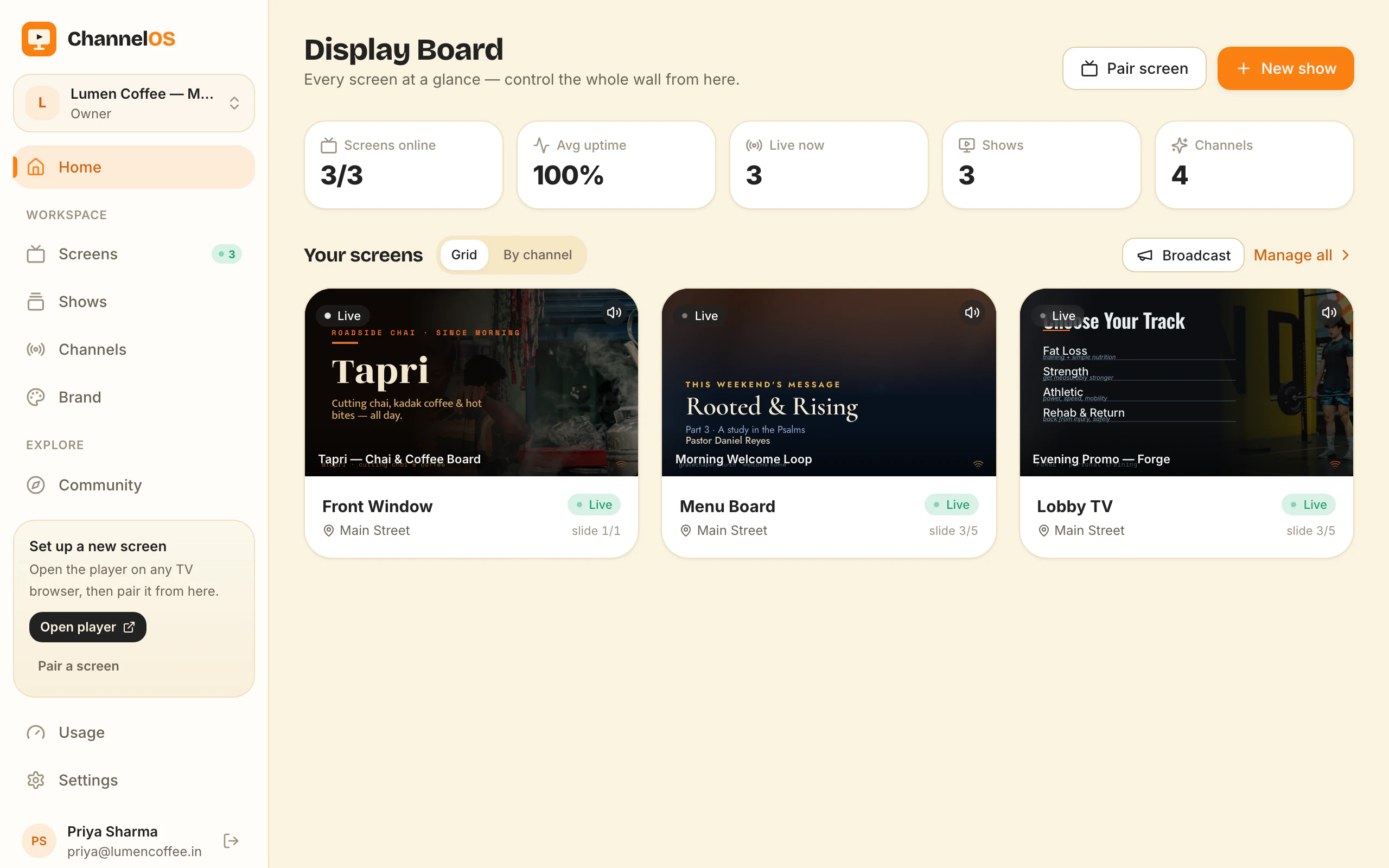
ChannelOS loads in the browser already built into the set (Android TV, Google TV, webOS, Fire TV), or in the browser on a Chromebox or a laptop in kiosk mode. You open one URL on the screen, scan the pairing code from your phone, and that screen is yours to control. No APK, no media player box, no separate player licence per device, and on most modern TVs no extra hardware whatsoever.
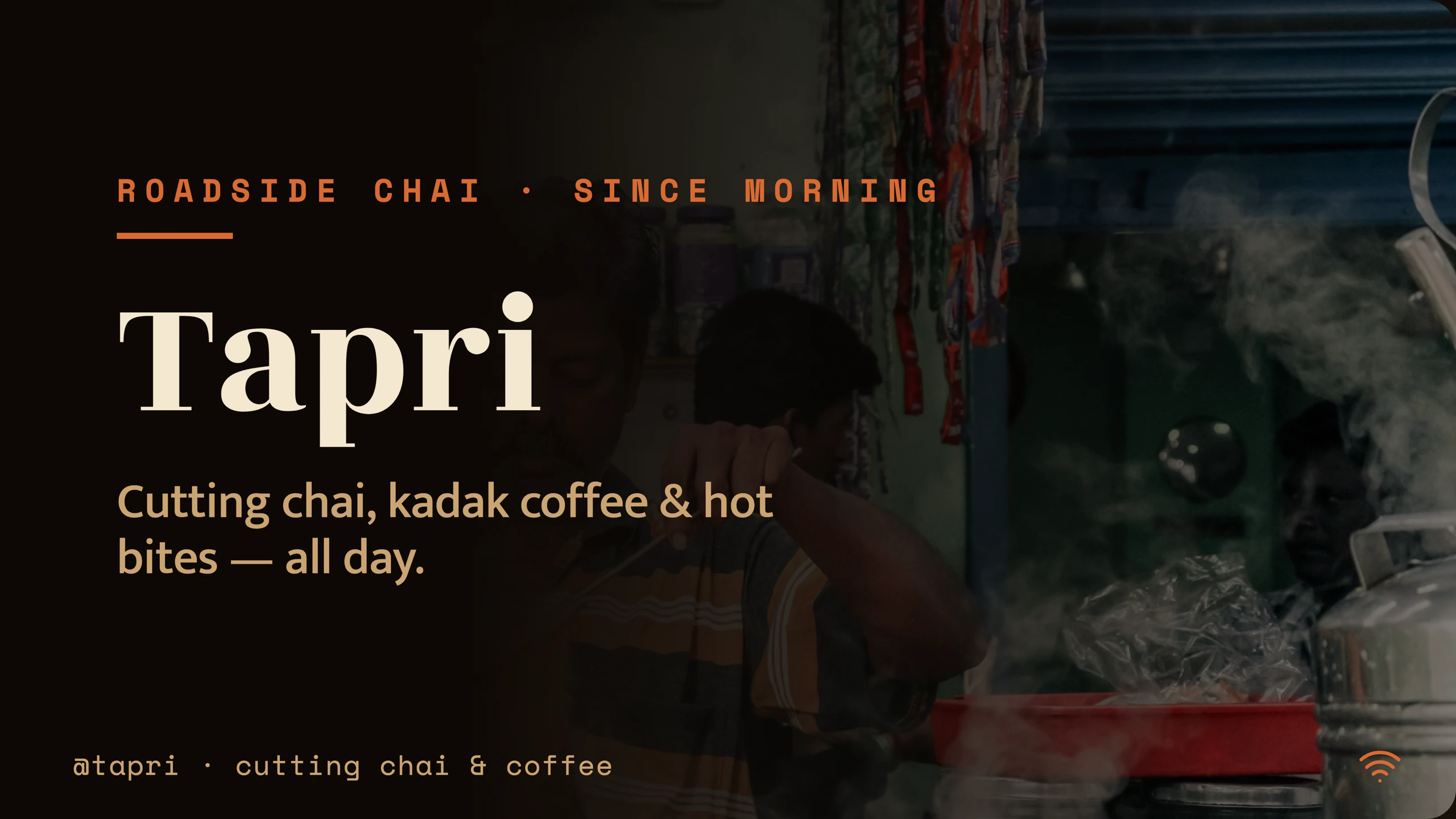
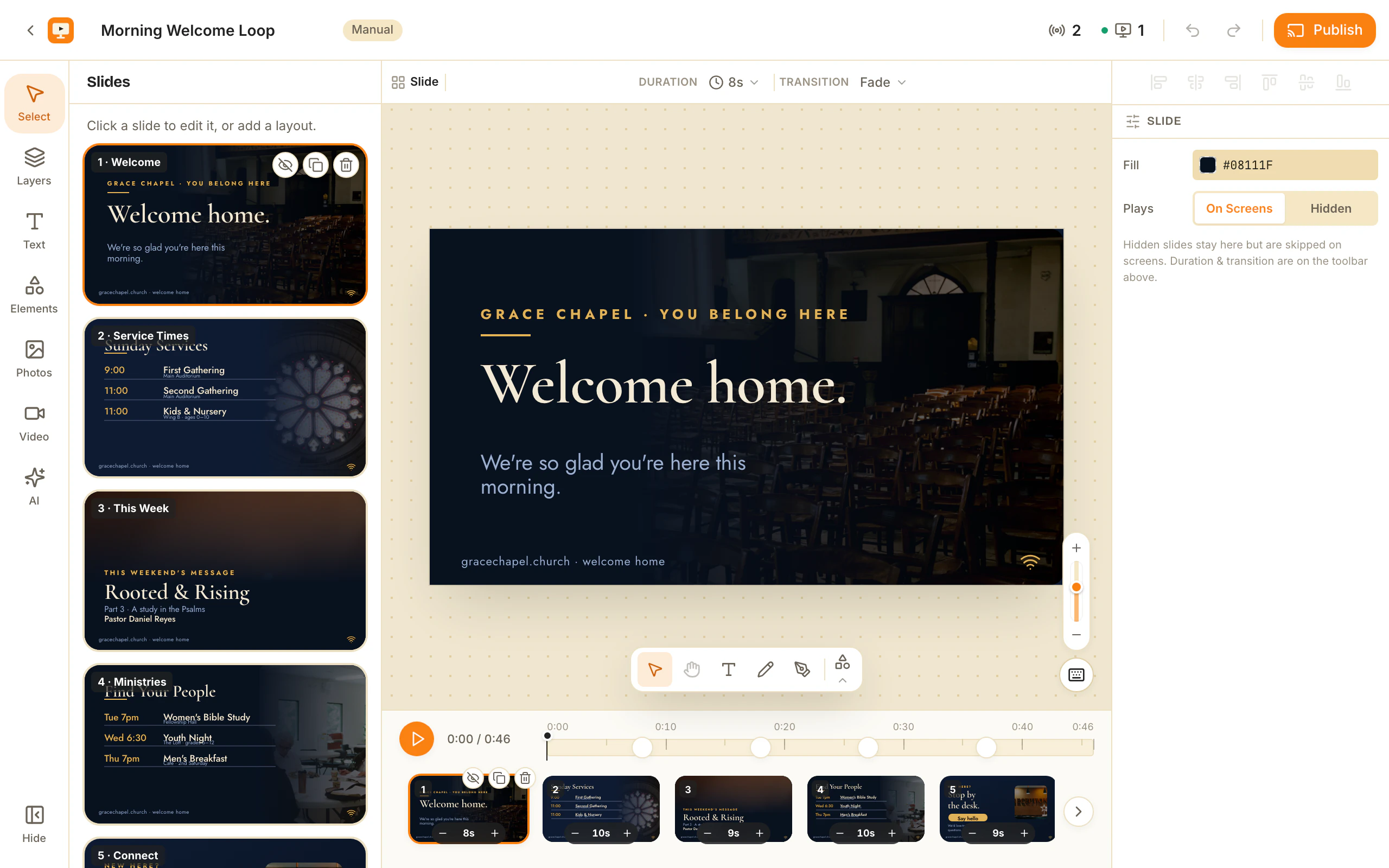
The free tier includes the making, not just the playing. This is the real difference from the other four. Describe what you want in a sentence and AI drafts a complete, editable multi-slide show, and it will read a PDF or an image for context, so an existing menu becomes slides without retyping. Then you take it the last stretch in a Canva-style editor with free Pexels photos and video, tables, groups and live widgets (clock, weather, QR, menu, ticker). One-tap background removal is on the paid plans. If you would rather start from something finished, the free templates and the free menu board maker (14 cuisines, from pizzeria to food truck) both hand you a board to edit.
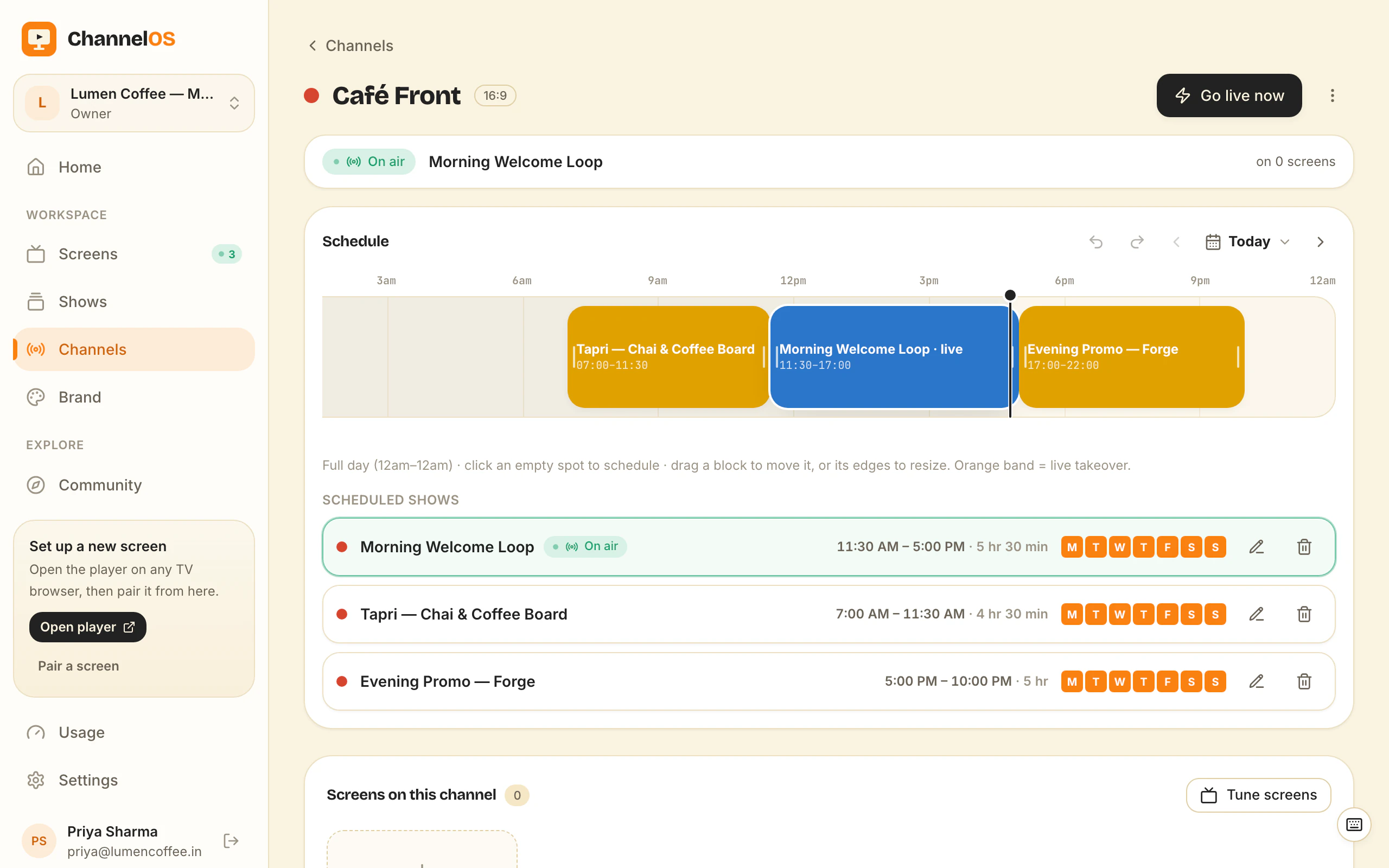
Scheduling is where free stops. Channels are named feeds with a real daily timeline: dayparting by hour and weekday, live takeover, go-live-now. Those are on the paid plans. On the free screen, an edit to a show that is already airing reaches the TV the moment you press Publish, with no sync step to wait for.
What it costs you. One free screen, which shows a ChannelOS banner along the bottom of the screen until you move to a paid plan; on Solo and Pro the second screen onwards is per screen per month, and Agency is a flat monthly base with 25 screens included and a per-screen price after that, all set out on the pricing page. And a browser-based screen needs the internet to start: one that is already playing keeps going if the Wi-Fi drops, but after a power cut it cannot come back until the connection does, so a Pi with local storage rides out a long outage better than a web page does. If your screens sit on genuinely unreliable Wi-Fi, Anthias or Xibo is the safer answer, and we would rather say so now.
Where “digital signage software free” stops being free
The searches for digital signage software free and its variants nearly all end at the same four surprises. Look for them deliberately:
| The catch | Who it applies to | What it actually means |
|---|---|---|
| Screen cap | Hosted free tiers | A fixed number of free screens; the next TV converts you |
| Vendor branding | OptiSigns, PosterBooking and ChannelOS free plans | The vendor’s mark on your board: OptiSigns branding, a PosterBooking watermark, or a ChannelOS banner along the bottom of the screen that any paid ChannelOS plan removes |
| Hardware per screen | Anthias, Xibo, most player apps | A Pi or stick to buy, mount and eventually replace |
| No design tool | Anthias, Xibo, PosterBooking | Free to play; you still have to make the artwork |
The fourth is the one people underestimate. A free plan that plays anything you give it is not much use on the Tuesday nobody has made the slides — which is why a screen ends up showing last month’s promo for a year.
The best free digital signage software for each kind of user
There is no single best free digital signage software, only the right currency to pay in.
- You have a Raspberry Pi and one screen, and you enjoy the tinkering. Anthias.
- You have a server, a technical person and real scheduling needs. Xibo — nothing else here is as deep for zero licence fee.
- You need four or more free screens and you already have artwork. PosterBooking.
- You want ready-made apps like weather, news and social feeds on screen, and branding is acceptable. OptiSigns’ free three, with dashboards on its paid plans.
- You have a TV, no artwork and no time. ChannelOS: nothing to install on the set, AI drafts the show, first screen free forever with a ChannelOS banner along the bottom of the screen that any paid plan removes.
The cheapest way to settle it is to run two in parallel for a week. All five cost nothing to try, none of them needs a card, and a wall tells you more in seven days than any comparison table — including this one.
Frequently asked questions
- What is the best free digital signage software?
- There isn't one winner, because the free tiers charge you in different currencies. Xibo is the most capable if you can run and patch a server. Anthias is the simplest self-hosted option if you have a Raspberry Pi and only need a loop. PosterBooking gives you the most free screens if you already have finished artwork and can live with a watermark on them. OptiSigns gives you three free screens if you can live with its branding on them. ChannelOS gives you one screen free forever, with a ChannelOS banner along the bottom of the screen, and includes the design work: AI drafts the whole multi-slide show.
- Is there any digital signage software that is free forever?
- Yes, several. Anthias and the self-hosted Xibo CMS are open-source and free of licence fees permanently. OptiSigns and ChannelOS run permanent free tiers rather than time-limited trials (free ChannelOS screens show a ChannelOS banner along the bottom of the screen, and any paid plan removes it), and PosterBooking has a $0 plan, though its pricing card also mentions a 3-month free trial, so check its current terms. What differs is the cap: Anthias and Xibo cap nothing but demand a server or a Raspberry Pi per screen, while the hosted tools cap the number of screens instead.
- Do I need to pay for hardware to use free digital signage software?
- It depends on the tool. Anthias expects a Raspberry Pi or a PC per screen. Xibo, PosterBooking and OptiSigns run a player app on a device such as a Fire TV Stick, Android box or Raspberry Pi. ChannelOS runs in the browser already built into the TV — Android TV, Google TV, webOS, Fire TV, a Chromebox or a laptop in kiosk mode — so on many sets there is no extra device at all.
- Is open-source digital signage software really free?
- The software is, the running of it is not. With Anthias or a self-hosted Xibo you pay no licence fee, but you supply the server or the Pi, keep it patched, back up the database, fix it when it breaks and rebuild it when the hardware dies. Xibo also licenses its Android, Tizen and webOS players commercially per device, so an open-source CMS can still produce a per-screen bill.
- What is the catch with free digital signage plans?
- Usually one of four things: a screen cap, vendor branding shown on your screen, features held back for paid plans, or the assumption that you already have finished artwork to display. Read for those four before you install anything — they matter far more than the feature list.
- Can I run free digital signage software without installing an app on the TV?
- Yes, with ChannelOS. It loads as a web page in the TV's own browser: you open one URL on the screen, scan the pairing code from your phone, and that screen is yours to control, with no media player box. There is also an optional Android TV app: it is not on Google Play yet, so it is a download from our own site for Android 8.0 or newer, and the TV's own browser still needs nothing installed. Anthias, Xibo, PosterBooking and OptiSigns all require their own player app or image, installed on a device attached to the screen or, for some of them, on a supported TV itself.
Your screen is two minutes away.
Open the player on a TV, scan the code, publish a show. Your first screen is free.
Free screens show a ChannelOS banner along the bottom of the screen, and any paid plan removes it.