Digital signage size and resolution: the numbers to build your boards at
What size should a digital sign actually be? 1920x1080 for a landscape TV, 1080x1920 for one hung sideways, and a 5% margin you keep clear at every edge. Here are the pixel numbers, the safe area, and why the resolution matters far less than people are told.
The bracket is on the wall, the TV is up, and now somebody has to answer a question nobody in the shop signed up for: what size do we make the thing that goes on it. Search for it and you get a wall of numbers, most of them for printed banners, and a few for LED walls that cost more than the shop.
The honest answer is short, and then there are four details that actually decide whether the board reads from across the room.
What size should a digital sign be?
1920x1080 pixels for a landscape TV, and 1080x1920 for a TV hung sideways. That is the whole answer for the overwhelming majority of screens on walls, because 1920x1080 is what nearly every television reports to the browser or player drawing the board, and a set hung sideways on a bracket still reports 1920x1080. It does not know it has been turned.
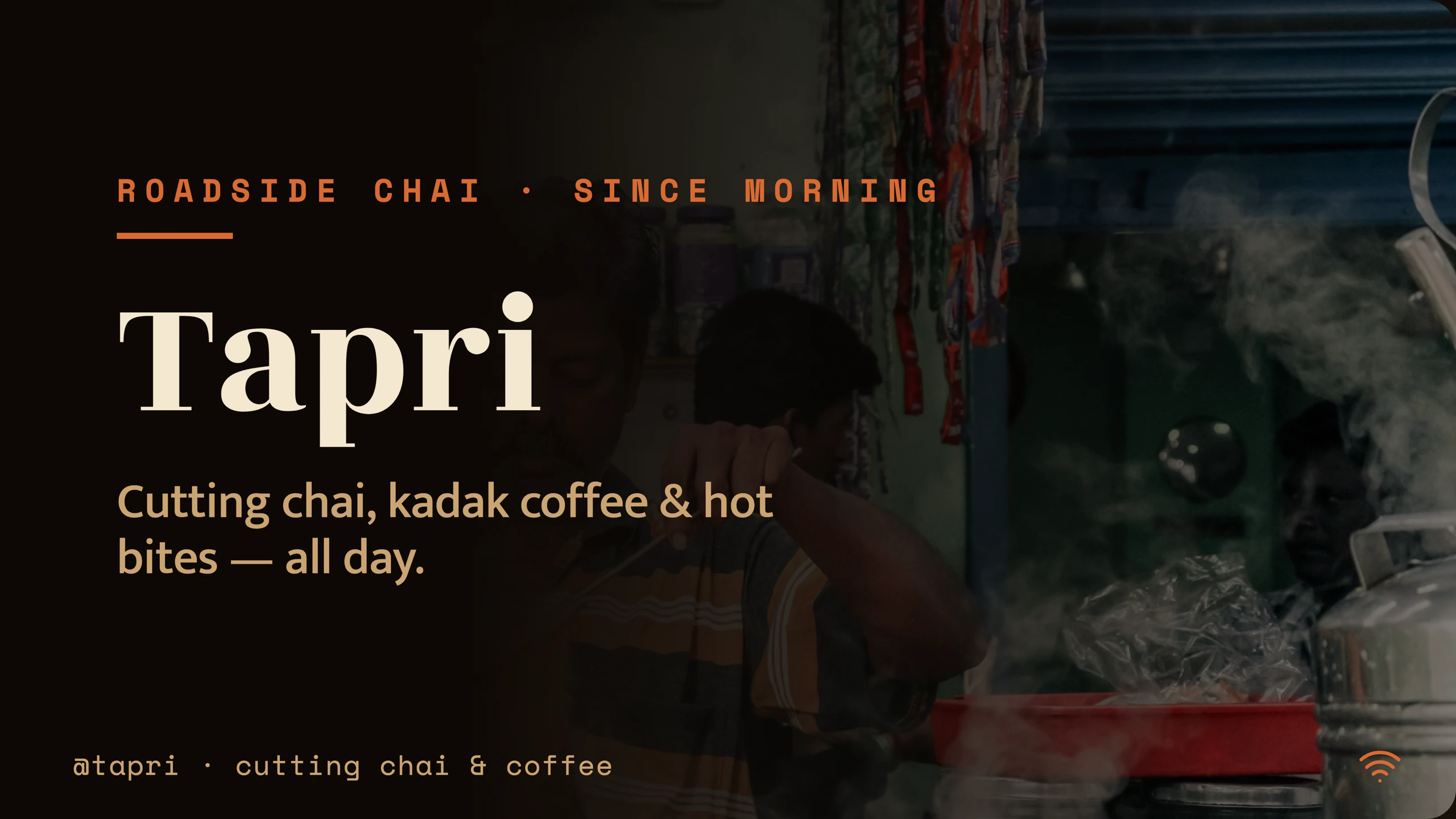
Those two are the only shapes ChannelOS authors in: Landscape 16:9 and Portrait 9:16. You pick one when you create a show, and you can flip it later in the editor, which parks the layout you are leaving so switching back is not a rebuild.
Does the resolution number actually matter?
Less than you have been told, and this is the part most size guides get wrong. A ChannelOS board is not a picture of a fixed size. It is a layout.
Every element’s position and size on a slide is stored as a percentage of the slide, and every type size, corner radius, border and shadow is expressed as 1% of the slide’s width. So the same show renders correctly at 1280x720, at 1920x1080 and at 3840x2160, and the panel supplies the resolution. There is no export step, no “save at 4K” checkbox, and no second copy of the board to keep in step with the first.
Where the pixel number does bite is on the things you drop into a slide:
- Photographs. A picture that fills the whole slide wants to be at least 1920 pixels on its long edge. One sitting in a quarter of the slide only needs about 960. Anything much larger is download weight the wall cannot show you.
- Video. 1080p H.264 mp4 is the safe default. Televisions and cheap browser sticks decode it in hardware; some of them will fall back to software decoding on a 4K file and stutter.
- Logos. Supply as SVG where you can, so the mark stays crisp on a 4K panel with no oversized PNG.
Should the screen be portrait or landscape?
Match the wall and the content, not the fashion. A narrow wall beside a door, a window facing a footpath, or a board that is genuinely a list read top to bottom all argue for portrait. A wall wider than it is tall, or content laid out in columns, argues for landscape.
Turning the set is a physical decision with a software consequence, and getting the software half wrong is how a board ends up upside down rather than merely sideways. The mechanics of telling the system which way you turned the TV, and why there is no portrait toggle, are covered in hanging the TV sideways.
What is the safe area, and why does text get cut off on some TVs?
Keep 5% clear on all four edges. Put nothing that has to be read inside that margin.
Two things cause the clipping. The first is overscan, a habit inherited from analogue broadcast where the set zooms the incoming picture slightly and crops the outer edge. Plenty of televisions still ship with it on. The fix lives in the set’s own picture menu rather than in your design: look for Screen Fit on Samsung, Just Scan on LG or Full Pixel on Sony, and set the picture size so one incoming pixel maps to one panel pixel. The second cause is more mundane: brackets are rarely perfectly square, and a board designed hard against the edge shows it.
| Canvas | Margin per edge | Safe area to design in |
|---|---|---|
| 1920x1080 landscape | 96 px sides, 54 px top and bottom | 1728x972 |
| 1080x1920 portrait | 54 px sides, 96 px top and bottom | 972x1728 |
| 3840x2160 landscape | 192 px sides, 108 px top and bottom | 3456x1944 |
| 1280x720 landscape | 64 px sides, 36 px top and bottom | 1152x648 |
A price that reads perfectly in the editor and loses its last digit on the wall is the easiest fault on this page to ship, and it costs nothing to avoid.
How big does the type have to be?
Work back from the furthest person who has to read it. The sign trade’s rule of thumb is about 25mm of capital-letter height for every 3 metres of viewing distance, and capital height is roughly 70% of the font size you type. On a 55-inch 1080p screen that puts an item name at roughly 56px at 3 metres and 115px at 6 metres.
Once type is that big, five to seven lines is all that fits, which is the real constraint on a board and the reason long menus get split across screens rather than shrunk. The full table, along with the contrast ratios that hold up at distance, is in digital menu board design.
What happens when the show and the screen are different shapes?
It still plays, and nothing is cropped or stretched. The board is letterboxed into whatever frame the panel gives it, so a mismatch costs you screen area rather than the board.
A portrait 9:16 show on an upright 1920x1080 panel plays as a 608x1080 column down the middle, about 31.6% of the width, with bars at the sides. A landscape 16:9 show on a turned panel plays at 1080x608 with bars top and bottom. That is a deliberate trade: the alternative is software deciding which third of your board to throw away.
What size should a digital signage template be?
A shape, not a pixel count. If a template is a real layout, the correct answer to “what size” is 16:9 or 9:16, and the pixels are the panel’s business. If a template is a flat image or a slide exported from a deck, it is a fixed artefact and it does need building at 1920x1080, along with a second copy for every other panel you own.
That difference is the whole reason to build the board in a layout tool rather than an image editor. It is the subject of making your own digital signage template, and every board in the templates gallery carries its shape with it, so remixing one into your own show never involves resizing anything.
What size is a TV menu board?
The same two numbers, 1920x1080 landscape or 1080x1920 portrait. What is different about a menu board is not the canvas, it is how much you are allowed to put on it once the type is large enough to read from the back of the queue.
Three practical consequences. A long menu belongs on two or three boards that rotate, not on one crowded screen. A counter with two TVs side by side usually works best as two halves of one menu rather than the same board twice. And prices want to sit on a consistent vertical alignment, because a column of prices is read as a column, not as the end of each line. You can lay all of that out in the free menu board maker and see it at the real proportions before anything goes on the wall.
Fixed-pixel artwork against a shape-based show
| Artwork exported at a fixed size | A ChannelOS show | |
|---|---|---|
| What you set up front | An exact pixel canvas | A shape: 16:9 or 9:16 |
| On a 4K panel | Upscaled from the size you exported | Drawn at the panel’s own resolution |
| Changing one price | Re-export, re-upload to each screen | Edit once, every tuned-in screen derives it |
| Portrait version | A second file to build and maintain | Flip the shape, the old layout stays parked |
| Type size at distance | Judged in the design tool | Judged in the design tool, same problem |
| Safe area | Yours to remember | Yours to remember |
The last two rows are there on purpose. Nothing about a layout engine saves you from designing type too small or running a headline into the bezel. Those stay your job on any platform.
Who should ignore all of this and buy something else?
Worth saying plainly, because the numbers above have a hard edge.
If your display is not a 16:9 panel, this is not the tool. ChannelOS authors in two shapes and nothing else. A video wall with a stitched pixel map, a 5:1 strip above a shelf, a curved LED array or a bespoke installation with a non-standard resolution needs a free-form pixel canvas, and you should buy a platform that exposes an arbitrary custom resolution, or use the wall controller’s own software. Xibo is one of the open ones if that is where you have landed.
If one board must fill both a portrait and a landscape screen automatically, buy something else too. ChannelOS does not swap in a shape-matched variant per screen. You author the portrait boards separately, or you accept the bars.
And if the display has no modern web browser, none of these numbers help you. The board is a web page in the screen’s own browser. An old panel with a dead app store is a panel that needs a cheap browser stick behind it before anything on this page applies.
What are the standard digital signage screen sizes?
| Panel | Pixels | Ratio | ChannelOS shape |
|---|---|---|---|
| HD ready TV | 1280x720 | 16:9 | Landscape |
| Full HD / 1080p TV | 1920x1080 | 16:9 | Landscape |
| Full HD TV, quarter-turned | 1080x1920 | 9:16 | Portrait |
| 4K / UHD TV | 3840x2160 | 16:9 | Landscape |
| 4K TV, quarter-turned | 2160x3840 | 9:16 | Portrait |
| 8K TV | 7680x4320 | 16:9 | Landscape |
| Laptop or Chromebox on a TV | Whatever the TV reports | 16:9 | Landscape |
Every row above is 16:9 or 9:16, which is why two shapes cover the wall. The odd ones out are the installations named in the previous section.
Build one at the right size today
Measure nothing, buy nothing, and start with the screen already in the room. Get a screen live, free: open play.channelos.tv in the television’s own browser, scan the code it shows with your phone, and the first screen is free forever. What that free screen includes, and where it stops, is on the free digital signage software page. After that it is priced per screen per month and the current rates are on the pricing page.
Then build the board at the shape of the wall, keep the outer 5% clear, and stand where the furthest customer stands before you decide the type is big enough. That last step is the one that separates a board people read from a board people walk past, and it takes thirty seconds. If the screen is not up yet, turning the TV you already own into a sign covers the hardware end of the same decision.
Frequently asked questions
- What resolution should digital signage content be?
- 1920x1080 is the working default, because that is what nearly every television reports to the browser drawing the board. Design a landscape board at 1920x1080 and a portrait board at 1080x1920. Photographs you place full-bleed want to be at least 1920 pixels on their long edge, and video is best supplied as 1080p H.264 mp4. A 4K panel does not need a separate 4K file: it renders the same board at its own pixel density.
- What size is a TV menu board?
- A TV menu board is the same size as any other board on that screen: 1920x1080 pixels for a normal landscape TV, or 1080x1920 for one hung sideways. The number that actually limits a menu board is not the canvas, it is the type size. Once item names are large enough to read from the back of the queue, about five to seven lines is all that fits on one screen, which is why long menus are split across two or three boards that rotate rather than crammed onto one.
- Do I need to design digital signage at 4K?
- Usually not. Text and layout in a browser-rendered board are resolution independent, so the same board is drawn sharp at whatever resolution the panel supplies. 4K earns its place in two cases: a screen read from arm's length, such as a spec sheet in a showroom, and a fine-pitch LED wall. On a board read from three metres across a room, a 4K source file is a larger download for a difference nobody in the room can see.
- What is the safe area for digital signage?
- Keep a 5% margin clear on all four edges and put nothing that has to be read inside it. On a 1920x1080 canvas that is 96 pixels left and right and 54 pixels top and bottom, leaving 1728x972 to design in. On 1080x1920 portrait it is 54 pixels left and right, 96 top and bottom, leaving 972x1728. The margin exists because some televisions still overscan, quietly cropping the outermost pixels, and because plenty of wall brackets are a degree or two off square.
- Why does text get cut off at the edge of my TV?
- Overscan. Some televisions still zoom the incoming picture slightly and crop the outer edge, a habit inherited from analogue broadcast. The fix is in the set's own picture menu, not in the design: look for Screen Fit on Samsung, Just Scan on LG, or Full Pixel on Sony, and set the picture size so one incoming pixel maps to one panel pixel. Keeping a 5% margin clear at every edge means the board still reads correctly on any set you cannot get into the menu of.
- What size should a digital signage template be?
- A digital signage template should carry a shape rather than a pixel count, if the tool it belongs to is a real layout engine. A ChannelOS template is authored as Landscape 16:9 or Portrait 9:16, and everything on the slide is stored as a percentage, so the same template renders correctly on a 1280x720 screen and a 3840x2160 one. A template exported as a flat image or a slide deck is a fixed artefact instead, and that one does need to be built at 1920x1080.
- Does ChannelOS support aspect ratios other than 16:9 and 9:16?
- No. ChannelOS authors in exactly two shapes, Landscape 16:9 and Portrait 9:16, which covers ordinary televisions in both mountings. There is no free-form pixel canvas, so a video wall with an unusual pixel map, a 5:1 shelf-edge strip or a bespoke LED array is not something to build here. Those belong on the wall's own controller software, or on a signage platform that exposes an arbitrary custom resolution.
Your screen is two minutes away.
Open the player on a TV, scan the code, publish a show. Your first screen is free.
Free screens show a ChannelOS banner along the bottom of the screen, and any paid plan removes it.