Part one · the screen
Why the TV you own is enough
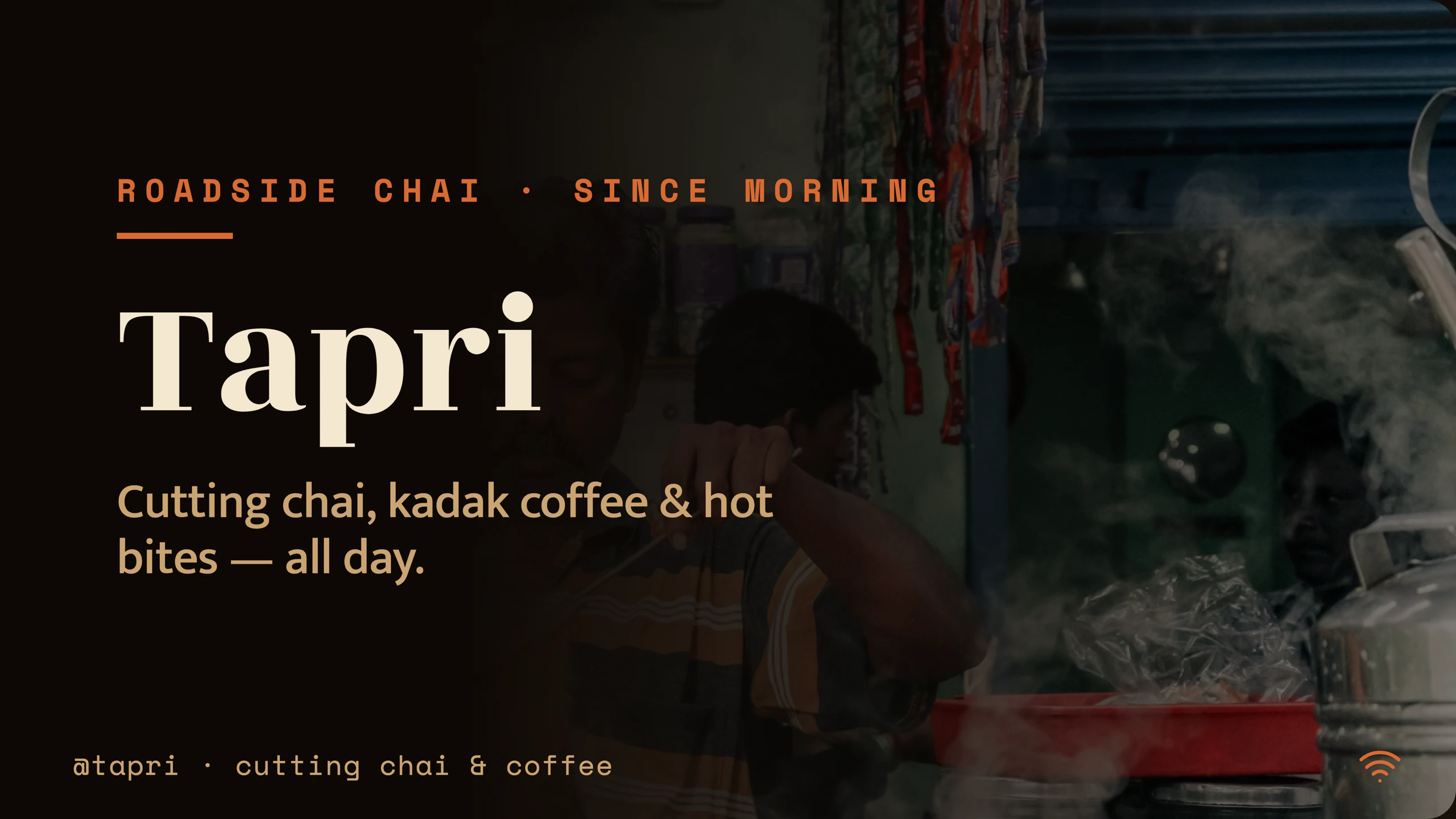
No box · no APK needed
It runs in the browser the TV already has.
Menu-board vendors sell player hardware because a player is a thing that can be
licensed per device, and in fairness a dedicated player is more predictable than a
five-year-old TV's browser — that's a real engineering argument, not a scam. The trade
is that you buy one per screen, mount it, and own it forever. ChannelOS takes the other
side of that trade: the screen opens a URL, and that's the entire installation.
- Android TV, Google TV, webOS and Fire TV — the built-in browser, nothing sideloaded
- A Chromebox, or a laptop in kiosk mode on the HDMI port, behaves identically
- Pair the screen from your phone — no per-device licence, no enrolment console
- Nothing to mount behind the panel, and nothing to replace when a box dies
Part two · the board
Change a price once, across every board
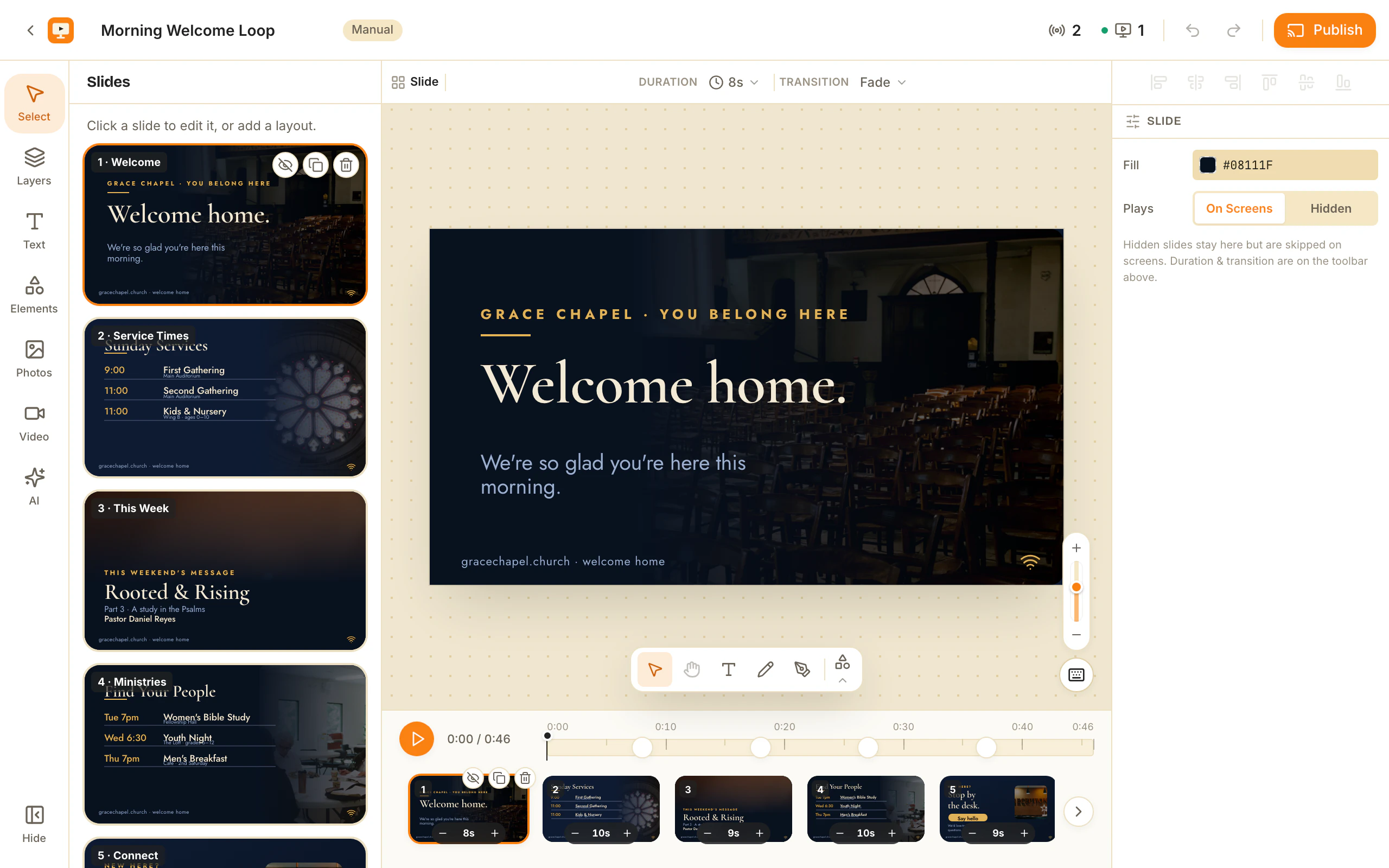
Edit once · airs everywhere
No publish step, no walking over to the TV.
What a screen is showing is derived from the schedule in real time, so there is no
publish-and-wait step between your edit and the wall. The first draft doesn't have to
be yours either — describe the place and the menu in one sentence and the AI builds a
complete, on-brand, multi-slide board you then edit; it can read a PDF menu, a photo or
a webpage for context. If you'd rather start from something finished, the
template gallery
is full of real, editable boards.
- Edit from a phone or a laptop — the screens follow, there's no sync to wait on
- Ten screens on the same channel change together, in one edit
- Describe the board in a sentence and AI drafts the whole thing, editable
- Canva-style editor: free Pexels photos and video, background removal, tables, live widgets
app.channelos.tv/shows/·/edit
Part three · what's on now
Breakfast, lunch and dinner on one screen
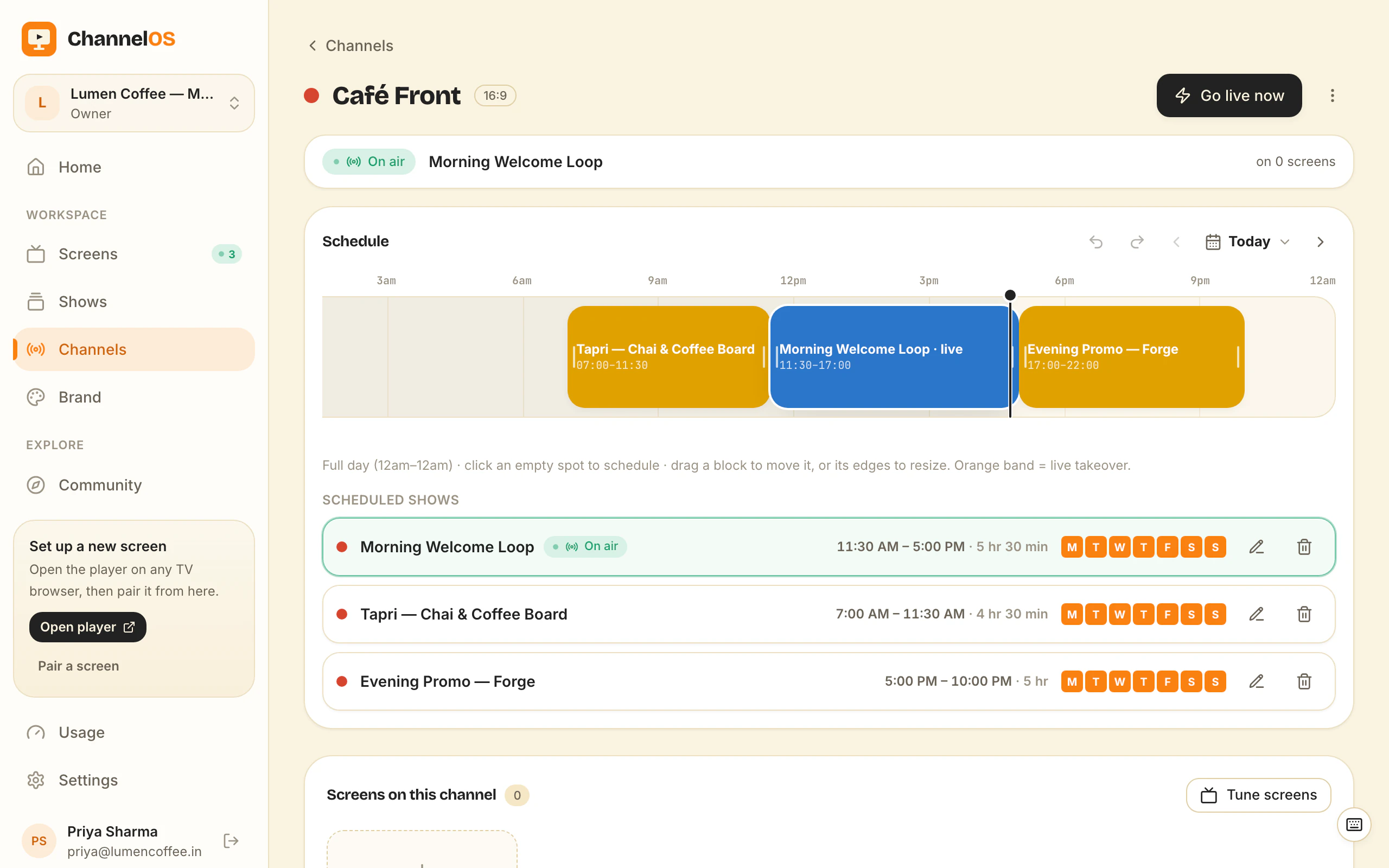
Channels · dayparting
The board changes itself at eleven.
This is the part a printed panel and an exported image both give up on. Breakfast comes
down at eleven whether or not anyone is free to change it, the evening board goes up at
five, and the weekend runs its own plan. Every screen tuned to that channel follows the
same clock, so a second location can't drift onto last month's prices.
- A channel is a named feed with a real daily timeline, not a playlist
- Schedule by hour and by weekday — a Saturday layout can differ from a Tuesday
- Live takeover for the thing that can't wait: a sold-out line, a one-hour offer
- Go live now when you'd rather not schedule anything at all
app.channelos.tv/channels/·