Diner burger combo meal board · Portrait, a free restaurant & menu digital signage template
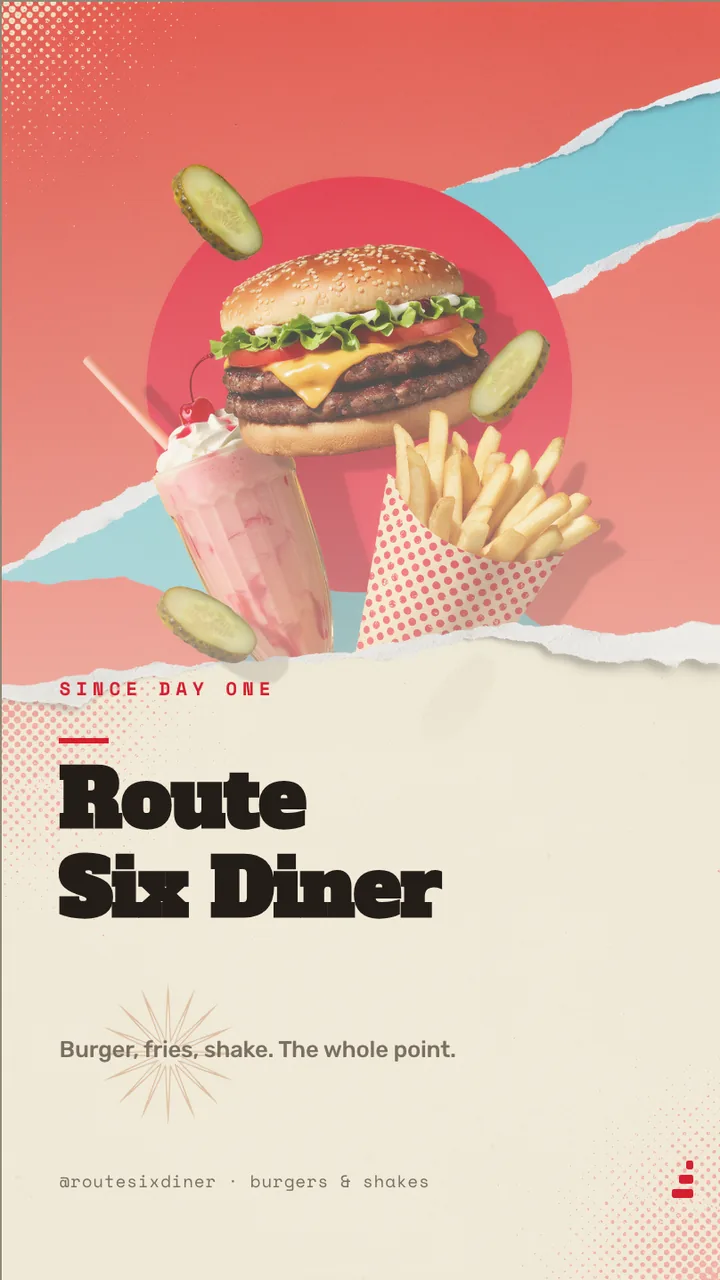
Since day one
Route Six Diner
Burger, fries, shake. The whole point.
@routesixdiner · burgers & shakes
Community Restaurant & menu 9:16

Diner burger combo meal board · Portrait Free restaurant & menu digital signage template

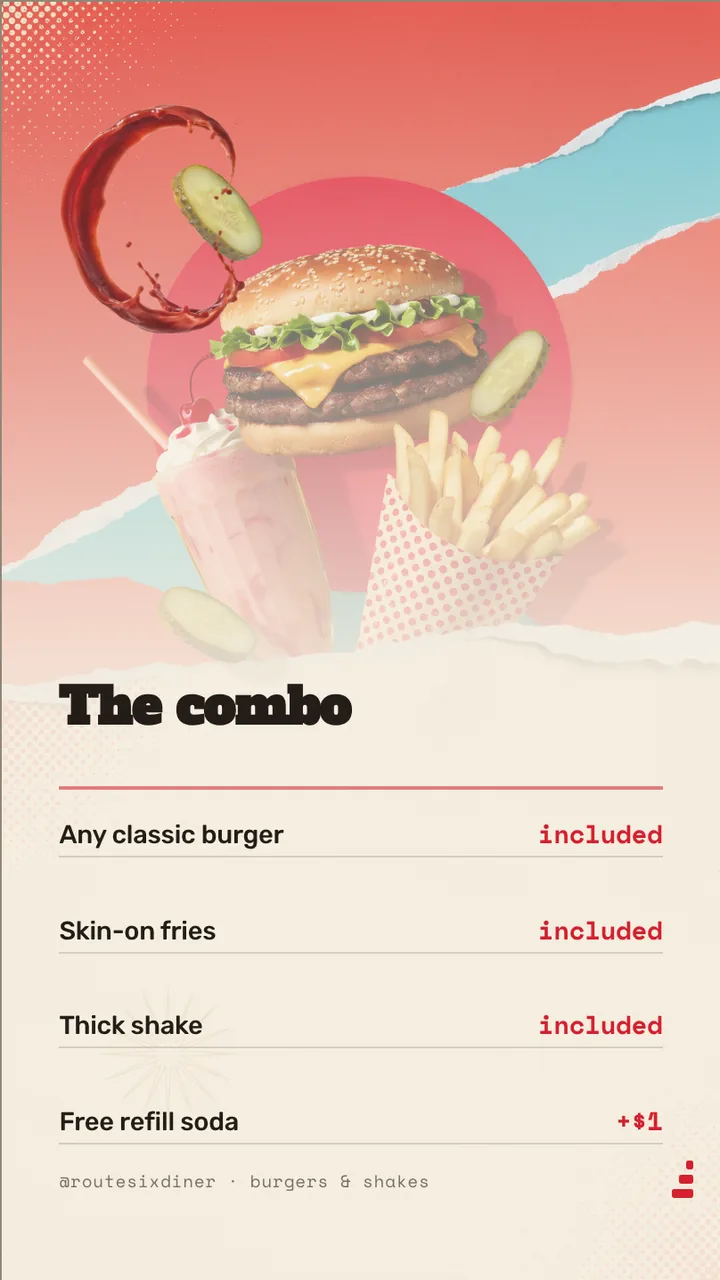
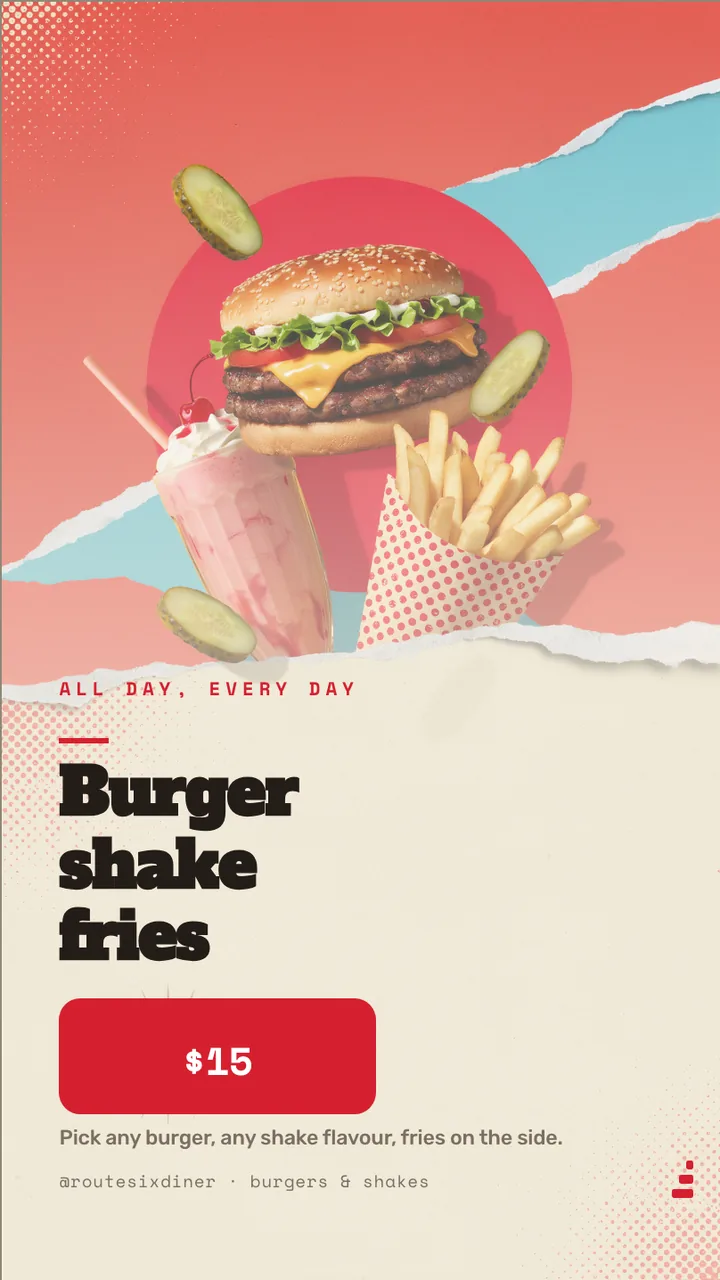
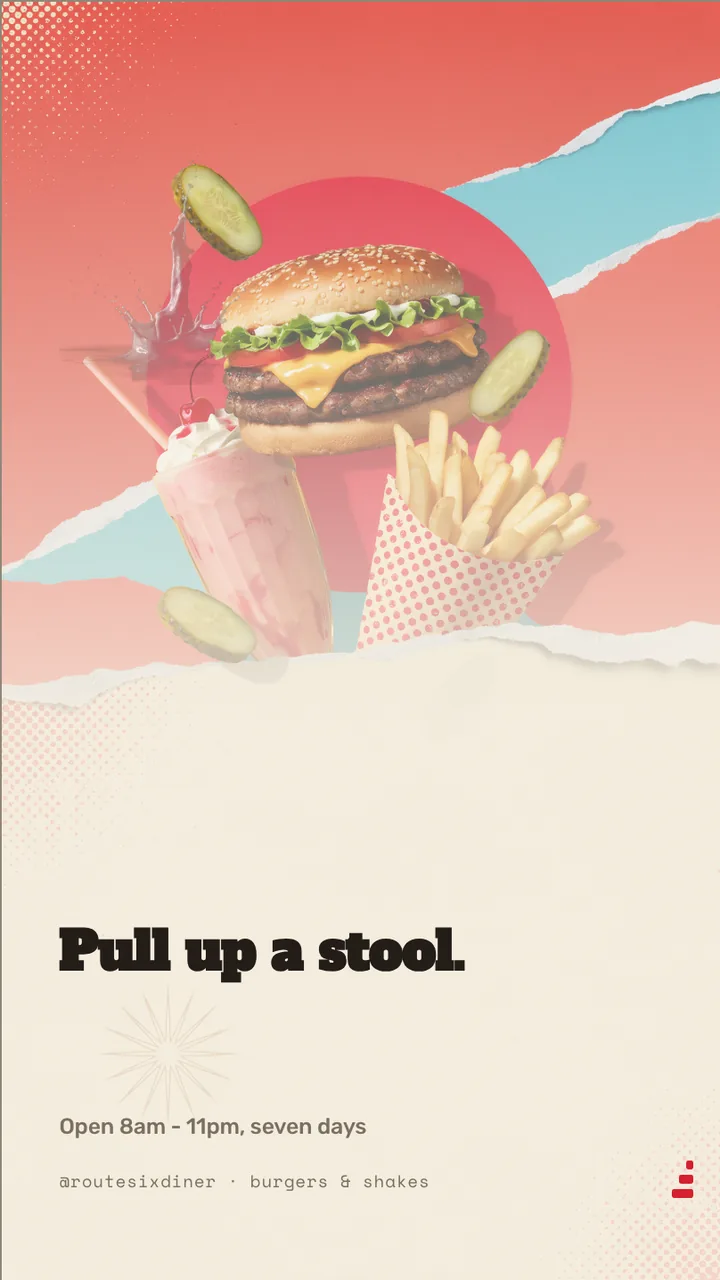
A diner counter runs this on a TV stood on its end: the venue, the priced list, one offer and the hours.

A free vertical burger combo board for any TV. Any burger, skin on fries and a thick shake, at one price. Four portrait slides, free to remix and edit.

By
ChannelOS
Slides
4
Likes
0
  • burger
  • diner
  • combo
  • shake
  • menu board
  • digital signage
  • restaurant
  • portrait
Use this template — free

Remix copies it into your workspace · edit · air it on any screen

Every slide in this template

4 slides, rendered exactly as they air on a TV.

What is a vertical burger combo board?

A burger combo board is a screen carrying one meal deal and what it includes. Run as a TV loop it shows the diner's name, the three things in the combo, the price on its own and the hours, so the counter is not explaining the deal all day.

This board runs on

Any screen with a modern browser. There is no media player box to buy and nothing to install: you open a link on the TV, pair it once, and change what it shows from your phone.

It is authored at 9:16, so stand the TV on its end and the board fills it.

Questions people actually ask

Why stand a TV on its end for a diner counter?
Because the wall usually decides. A diner counter tends to sit against a pillar, a narrow strip beside a doorway or a window that is taller than it is wide, and a landscape panel there either overhangs or shrinks to fit. A portrait board reads as one column top to bottom, which suits a list. What it is not is a rotated landscape design: turning a wide layout on its side re-wraps every line, so the board is authored in the shape the screen is mounted in.
How do I mount a screen in portrait safely?
Three checks before drilling. The bracket has to allow rotation, which most VESA plates do but some fixed ones do not. The panel itself has to be rated for portrait: many consumer TVs are not, because heat rises differently through a rotated panel and the warranty often says so in a line people skip. And the cables have to leave the set without a tight bend at the new bottom edge. A commercial signage panel is usually rated for both orientations, which is one of the real things the premium buys.
Why put a combo on its own screen?
Because a deal on a price list is read as another price. A combo works when it is one number with three things under it and nothing else competing, which is exactly what a slide in a loop gives you. The price list is still in the loop, one slide away, so nothing is lost by letting the deal have its own moment.
Should the combo let people choose?
Choice is what makes it feel like value, so say which choices are open in plain words: any burger, any shake. What kills it is a list of exclusions in small type, which reads as a trap and slows every order down while somebody checks. If a burger genuinely cannot be in the deal, that is one line on the slide, not a footnote.

More restaurant & menu templates

Make this one yours.

Remix it into your workspace, change what you like, and put it on a TV. Your first screen is free.

Sell it instead of buying it. The ChannelOS partner program pays 20% of what each business you refer pays us for their first 12 months, then 10% for as long as they stay. Free to join, nothing to stock.

See the partner program →