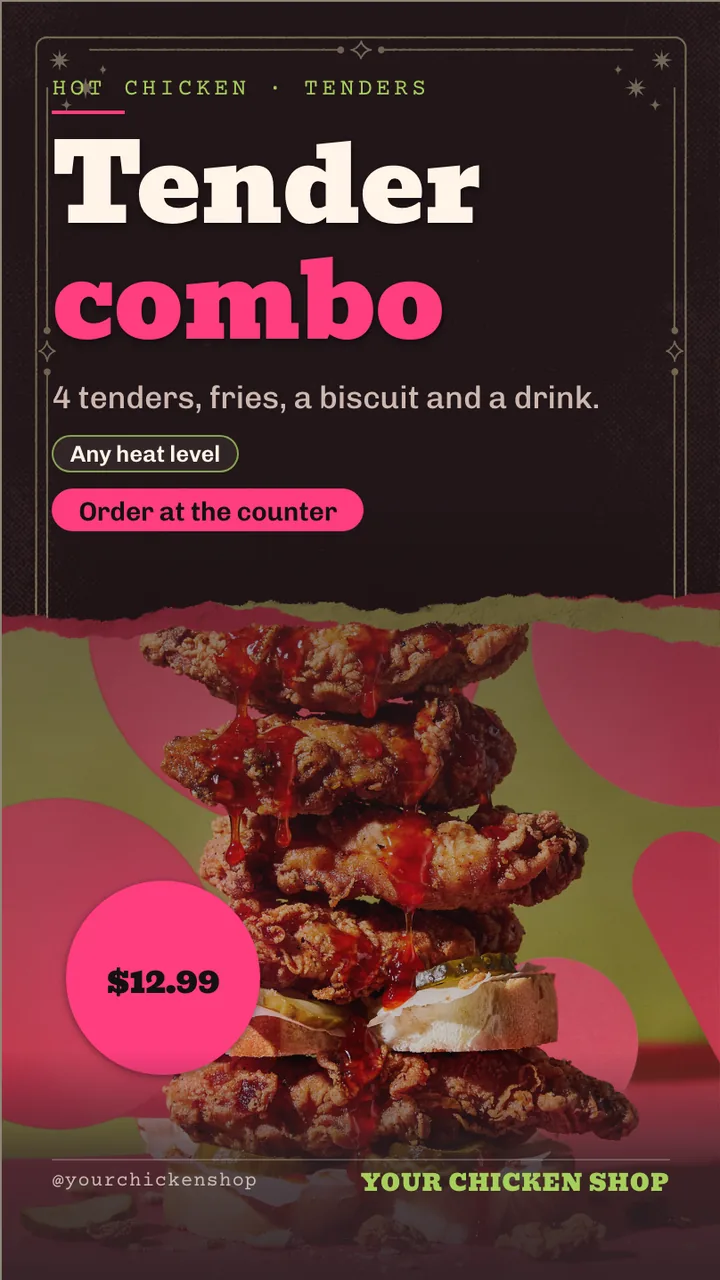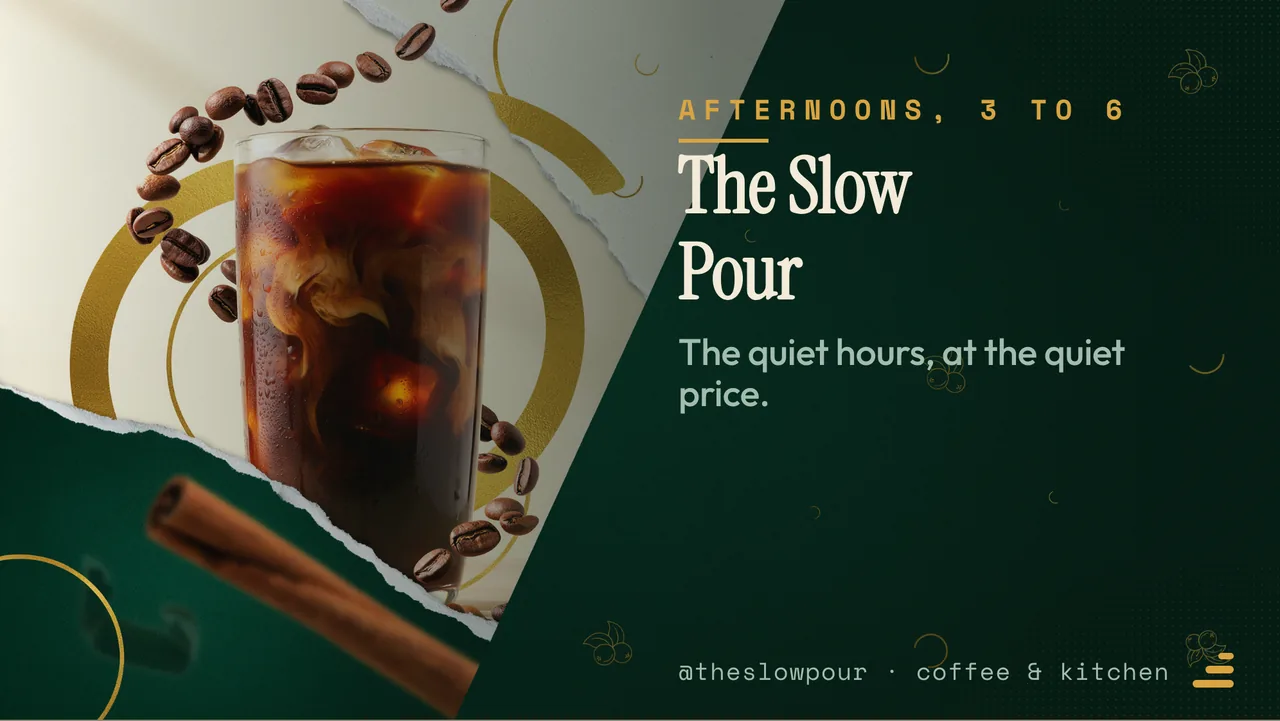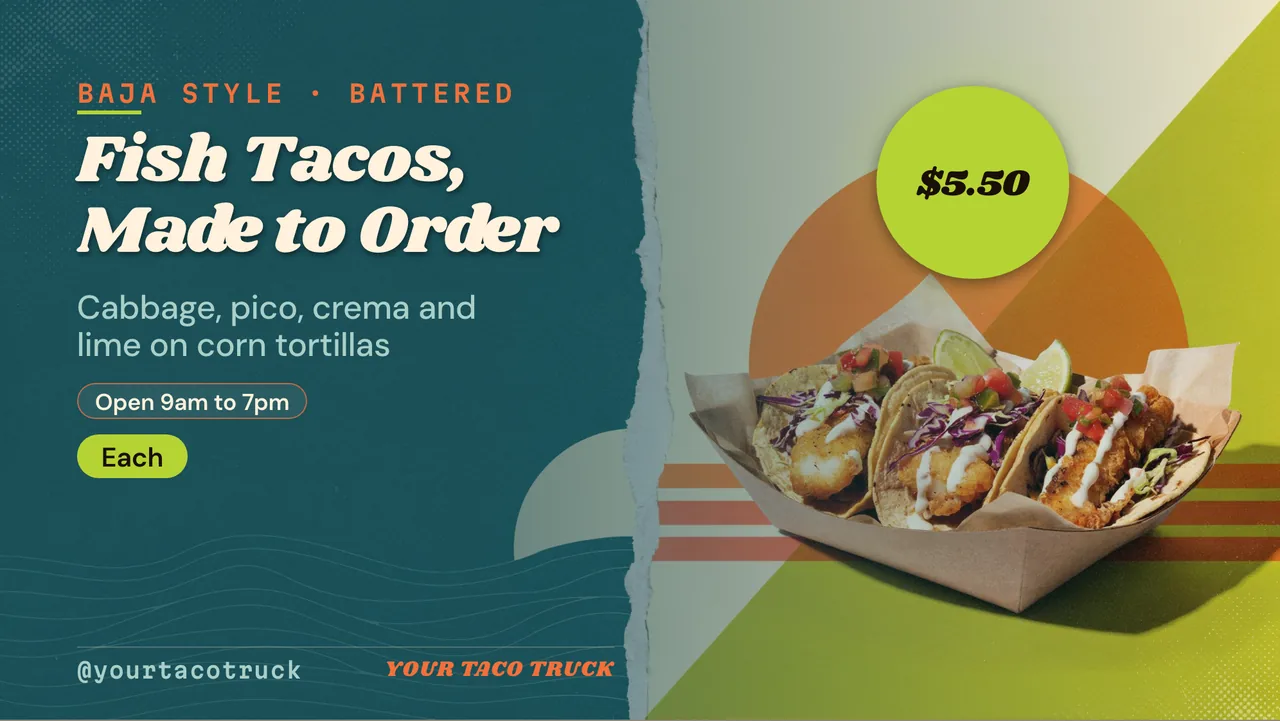
Charcoal grill kebab menu board · Portrait Free restaurant & menu digital signage template
A charcoal grill runs this on a TV stood on its end: the venue, the priced list, one offer and the hours.
A free vertical grill menu board for any TV. Lamb seekh, chicken shish, adana kofte and halloumi, priced, with a mixed platter. Your first screen is free.
- By
- ChannelOS
- Slides
- 4
- Likes
- 0
- grill
- bbq
- kebab
- menu
- menu board
- digital signage
- restaurant
- portrait
Use this template, free
- 1 Create a free account and this template opens in your own workspace.
- 2 Change every word, price and photo in the editor, on a phone or a computer.
- 3 On the TV, open play.channelos.tv, pair it from your phone with the code it shows, then publish the board to it.
Every slide in this template
4 slides, rendered exactly as they air on a TV.
- 1
-
 2
2 -
 3
3 -
 4
4
Every word on these slides is text you can change
-
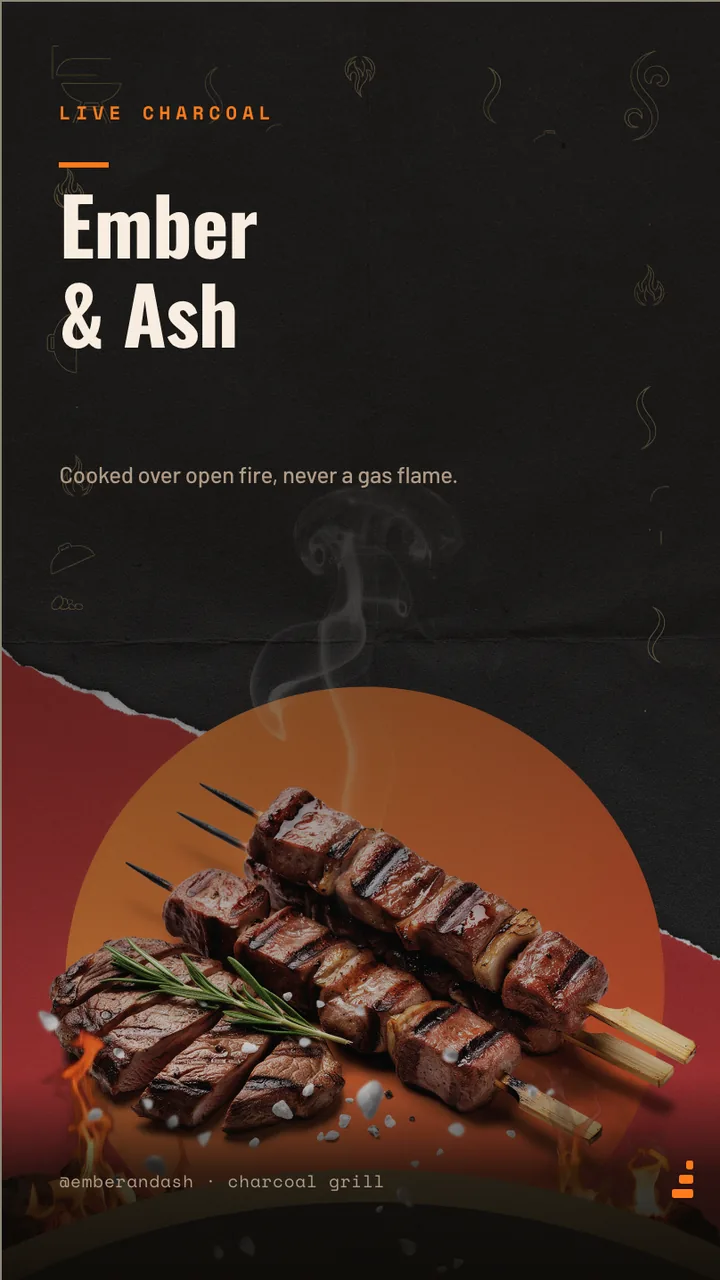
Slide 1
- Live charcoal
- Ember & Ash
- Cooked over open fire, never a gas flame.
- @emberandash · charcoal grill
-
Slide 2
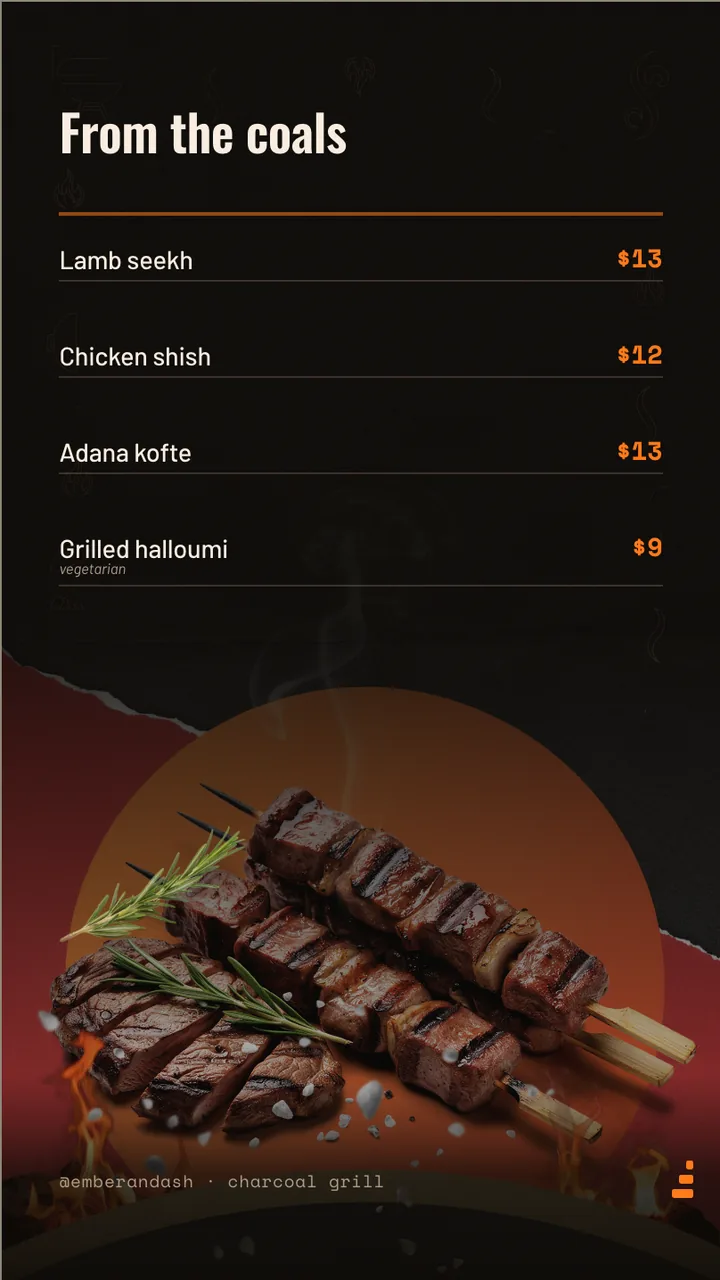
- From the coals
- Lamb seekh
- $13
- Chicken shish
- $12
- Adana kofte
- $13
- Grilled halloumi
- $9
- vegetarian
- @emberandash · charcoal grill
-
Slide 3
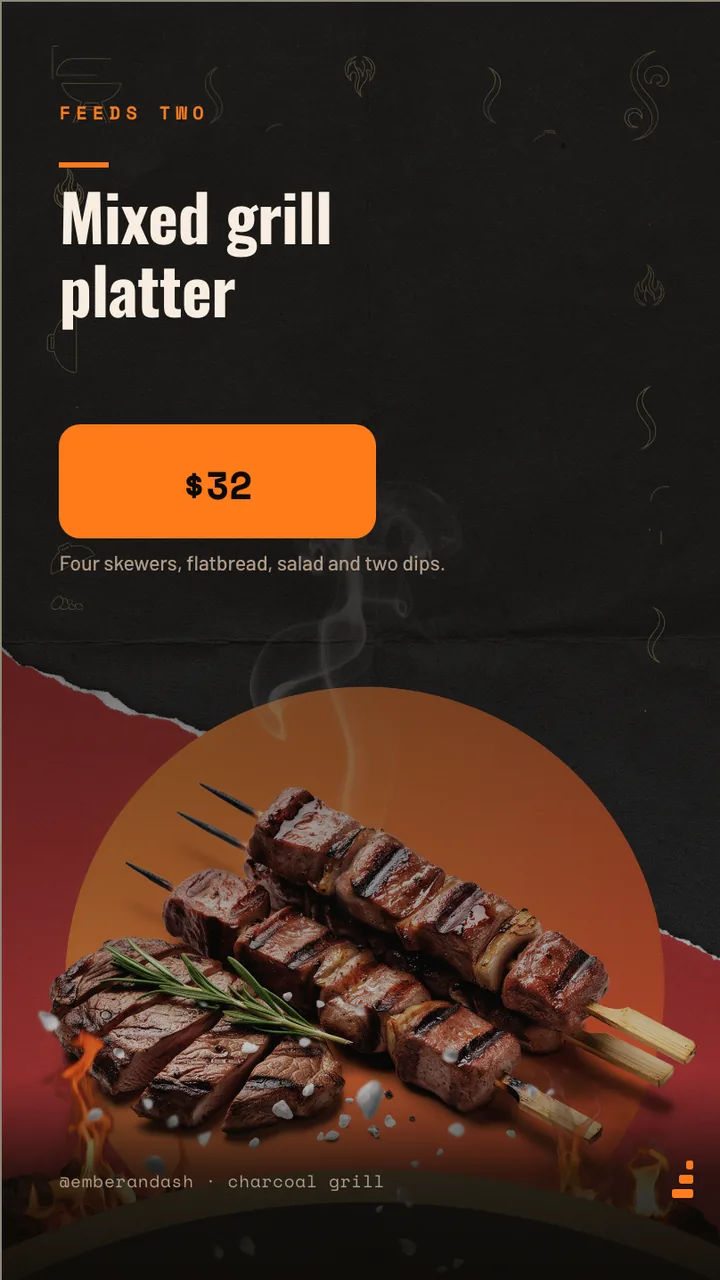
- Feeds two
- Mixed grill platter
- $32
- Four skewers, flatbread, salad and two dips.
- @emberandash · charcoal grill
-
Slide 4
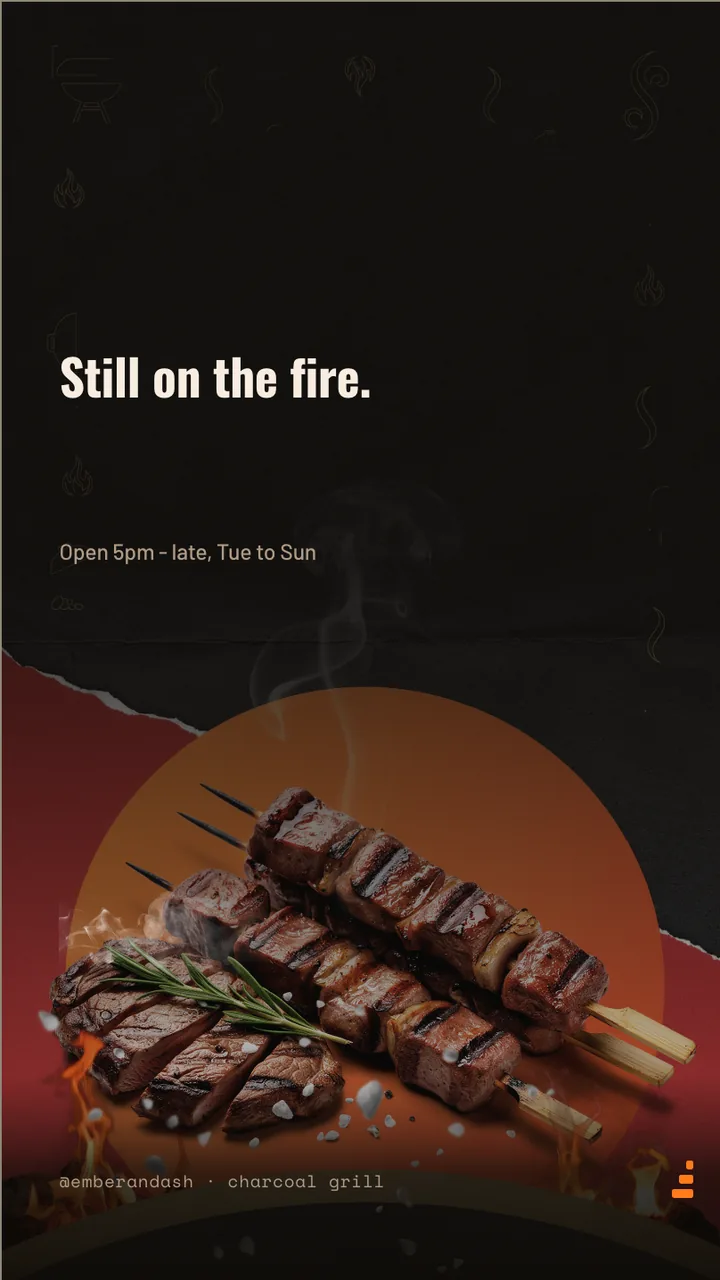
- Still on the fire.
- Open 5pm - late, Tue to Sun
- @emberandash · charcoal grill