Wood-fired pizzeria menu board · Portrait Free restaurant & menu digital signage template
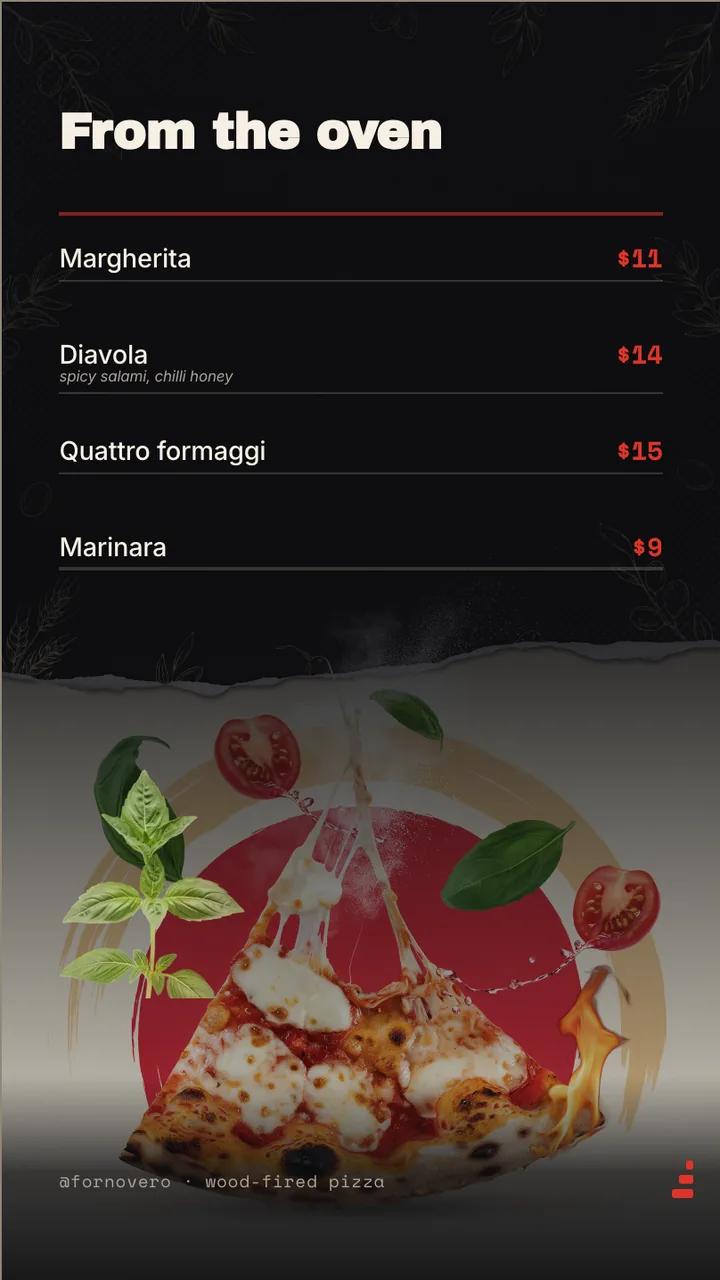
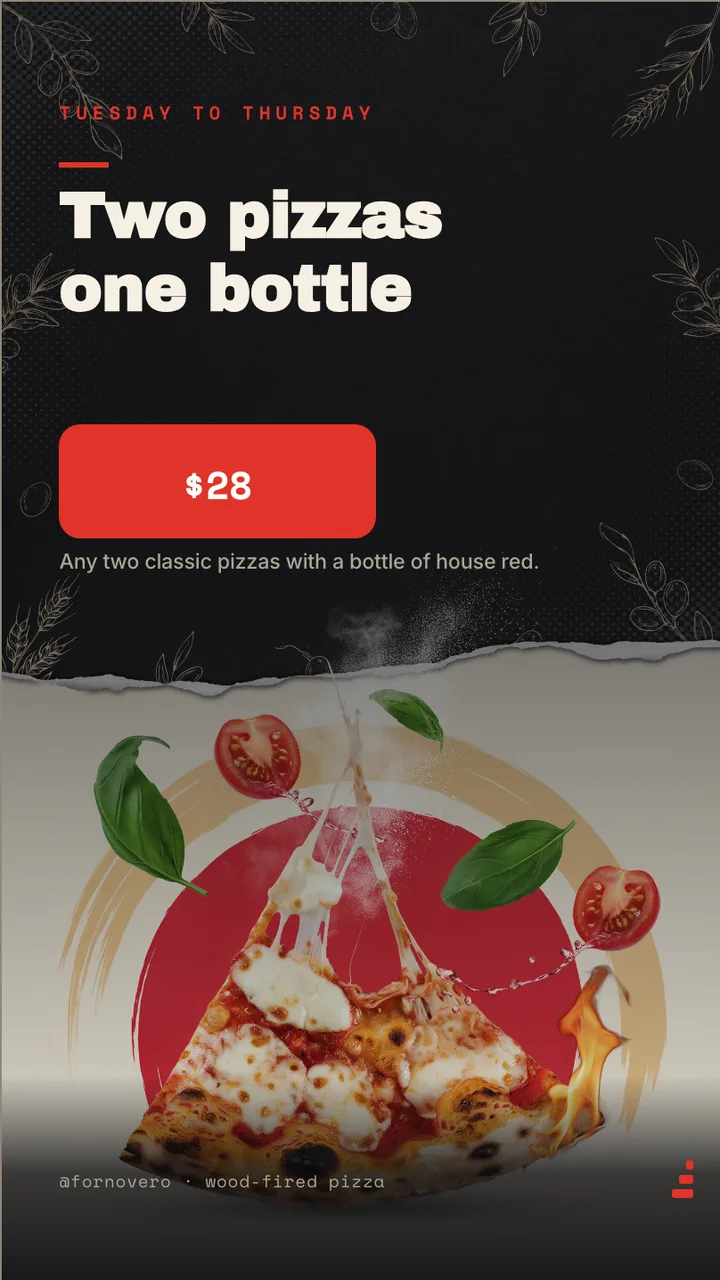
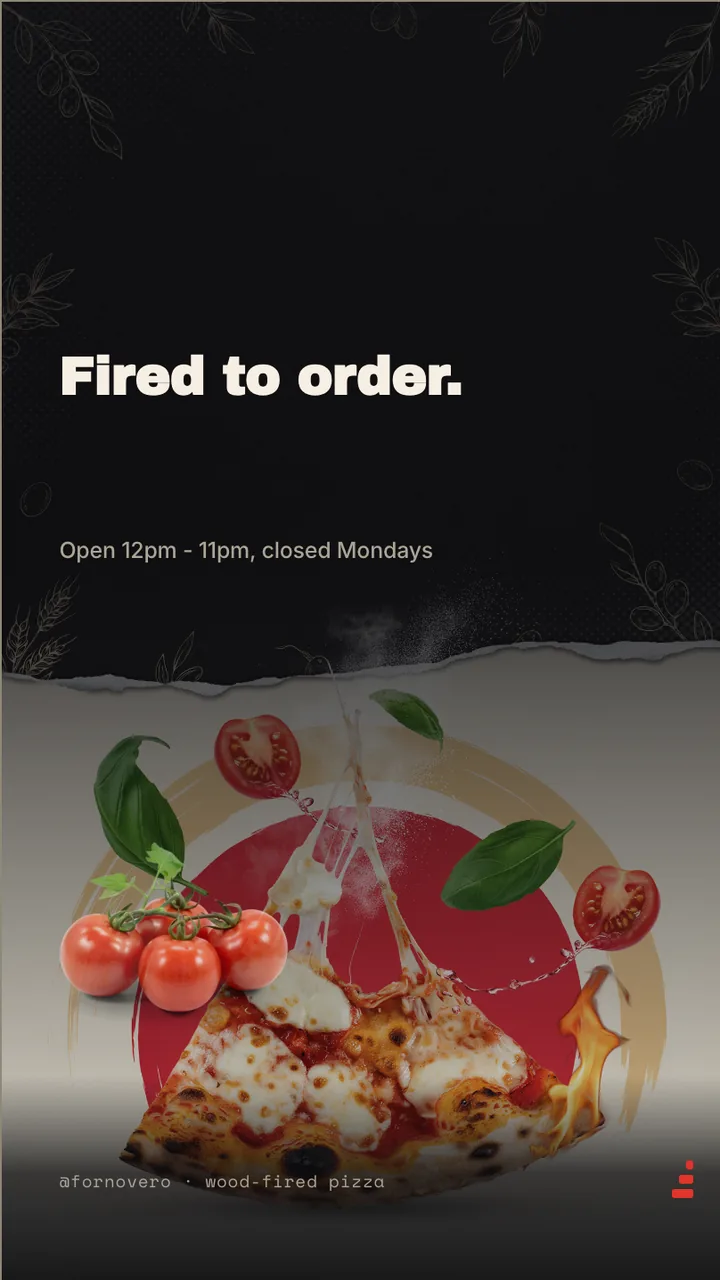
A pizzeria counter runs this on a TV stood on its end: the venue, the priced list, one offer and the hours.
A free vertical pizzeria menu board for any TV. Margherita to quattro formaggi, priced, with a two-for deal and the oven hours. Your first screen is free.
- By
- ChannelOS
- Slides
- 4
- Likes
- 0
- pizza
- pizzeria
- menu
- italian
- menu board
- digital signage
- restaurant
- portrait
Use this template, free
- 1 Create a free account and this template opens in your own workspace.
- 2 Change every word, price and photo in the editor, on a phone or a computer.
- 3 On the TV, open play.channelos.tv, pair it from your phone with the code it shows, then publish the board to it.
Every slide in this template
4 slides, rendered exactly as they air on a TV.
- 1
-
 2
2 -
 3
3 -
 4
4
Every word on these slides is text you can change
-
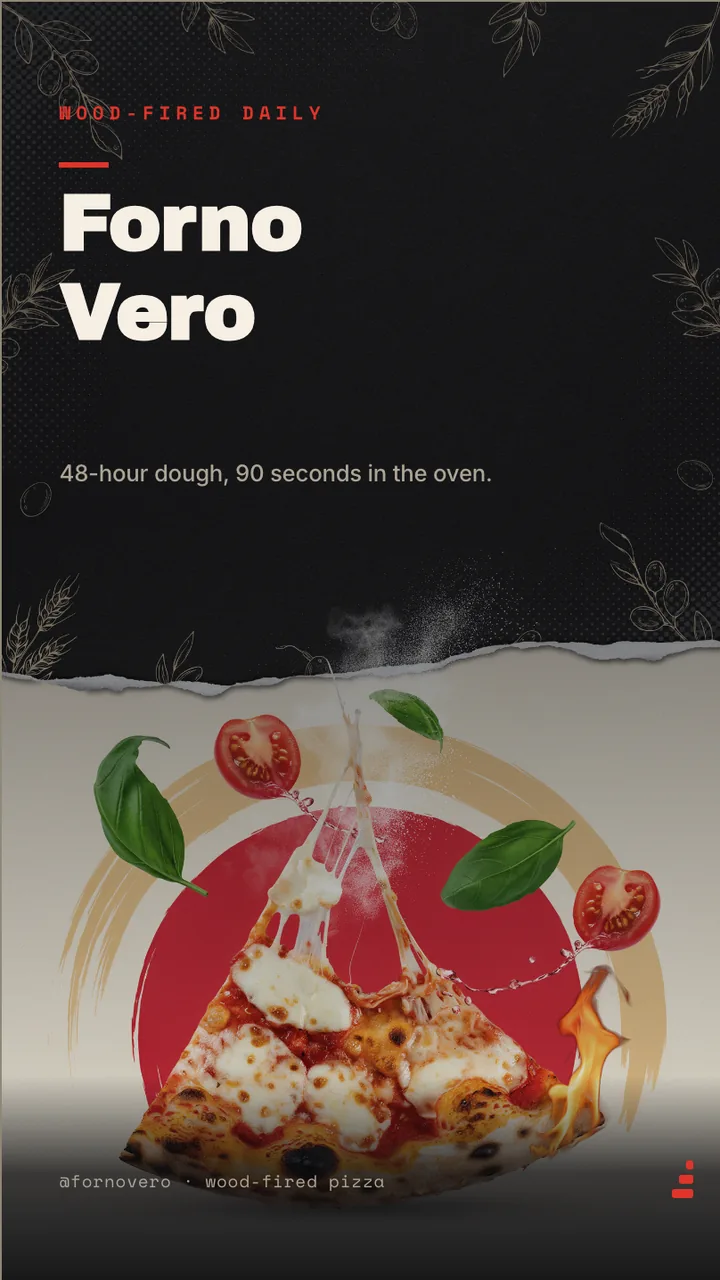
Slide 1
- Wood-fired daily
- Forno Vero
- 48-hour dough, 90 seconds in the oven.
- @fornovero · wood-fired pizza
-
Slide 2
- From the oven
- Margherita
- $11
- Diavola
- $14
- spicy salami, chilli honey
- Quattro formaggi
- $15
- Marinara
- $9
- @fornovero · wood-fired pizza
-
Slide 3
- Tuesday to Thursday
- Two pizzas one bottle
- $28
- Any two classic pizzas with a bottle of house red.
- @fornovero · wood-fired pizza
-
Slide 4
- Fired to order.
- Open 12pm - 11pm, closed Mondays
- @fornovero · wood-fired pizza