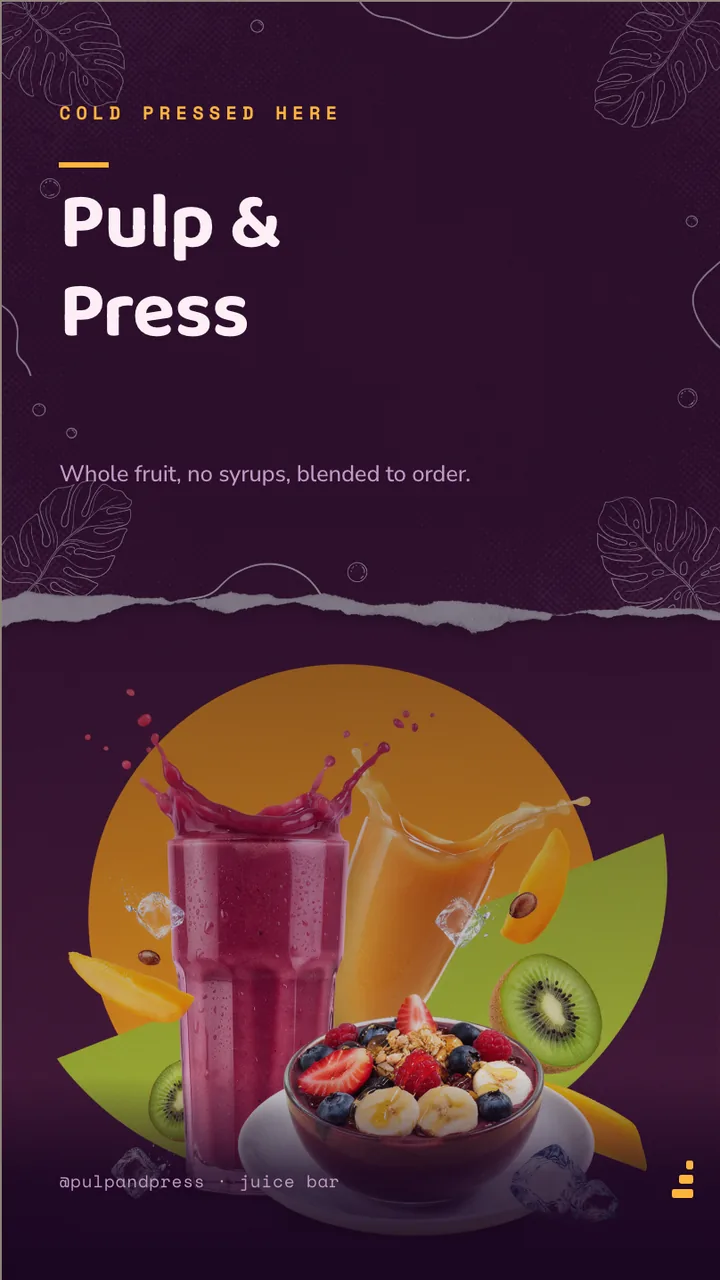
Juice bar smoothie menu board · Portrait Free restaurant & menu digital signage template
A juice counter runs this on a TV stood on its end: the venue, the priced list, one offer and the hours.
A free vertical juice bar menu board for any TV. Smoothies, cold pressed juices and bowls, priced, with a morning bowl and juice deal.
- By
- ChannelOS
- Slides
- 4
- Likes
- 0
- juice
- smoothie
- acai
- menu
- menu board
- digital signage
- restaurant
- portrait
Use this template, free
- 1 Create a free account and this template opens in your own workspace.
- 2 Change every word, price and photo in the editor, on a phone or a computer.
- 3 On the TV, open play.channelos.tv, pair it from your phone with the code it shows, then publish the board to it.
Every slide in this template
4 slides, rendered exactly as they air on a TV.
- 1
-
 2
2 -
 3
3 -
 4
4
Every word on these slides is text you can change
-
Slide 1
- Cold pressed here
- Pulp & Press
- Whole fruit, no syrups, blended to order.
- @pulpandpress · juice bar
-
Slide 2
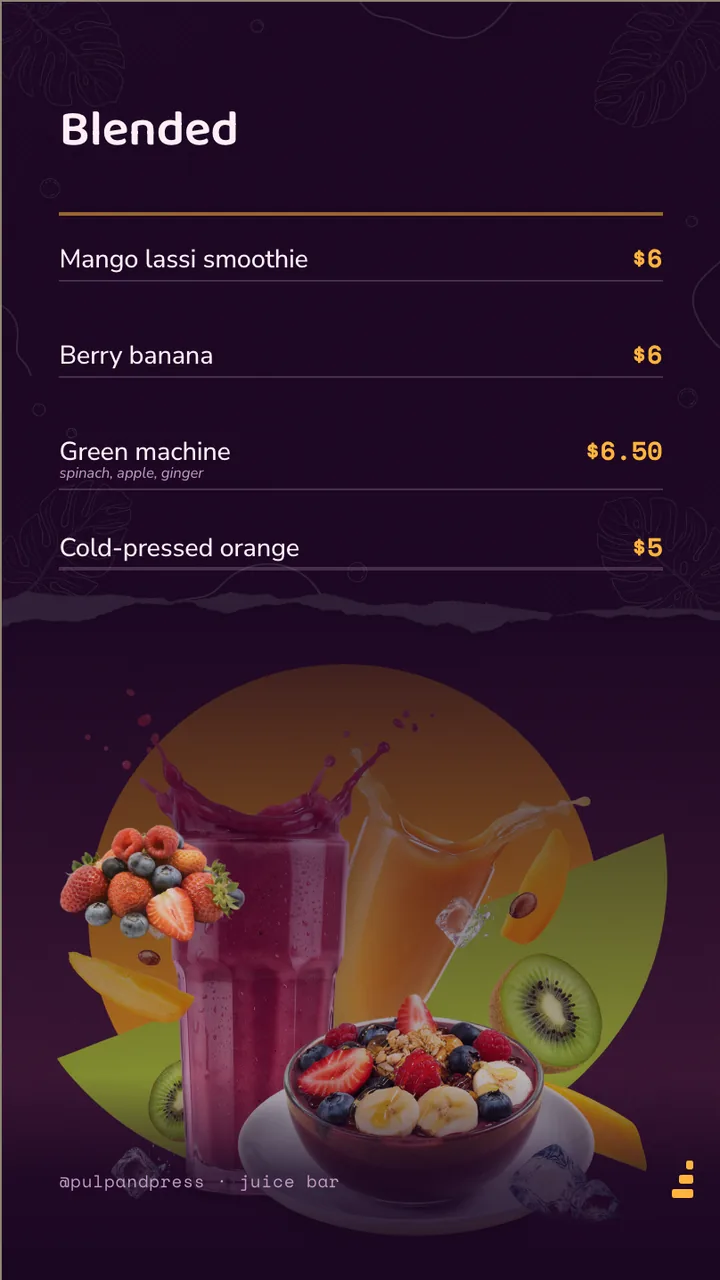
- Blended
- Mango lassi smoothie
- $6
- Berry banana
- $6
- Green machine
- $6.50
- spinach, apple, ginger
- Cold-pressed orange
- $5
- @pulpandpress · juice bar
-
Slide 3
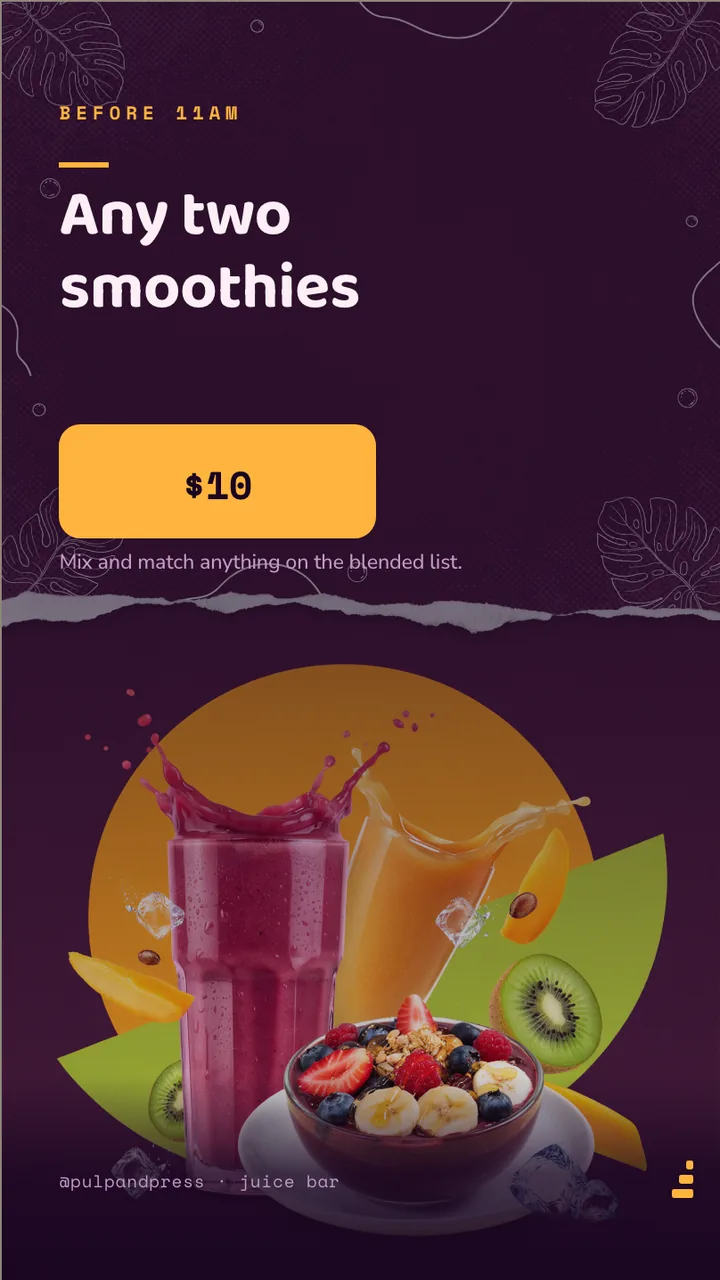
- Before 11am
- Any two smoothies
- $10
- Mix and match anything on the blended list.
- @pulpandpress · juice bar
-
Slide 4
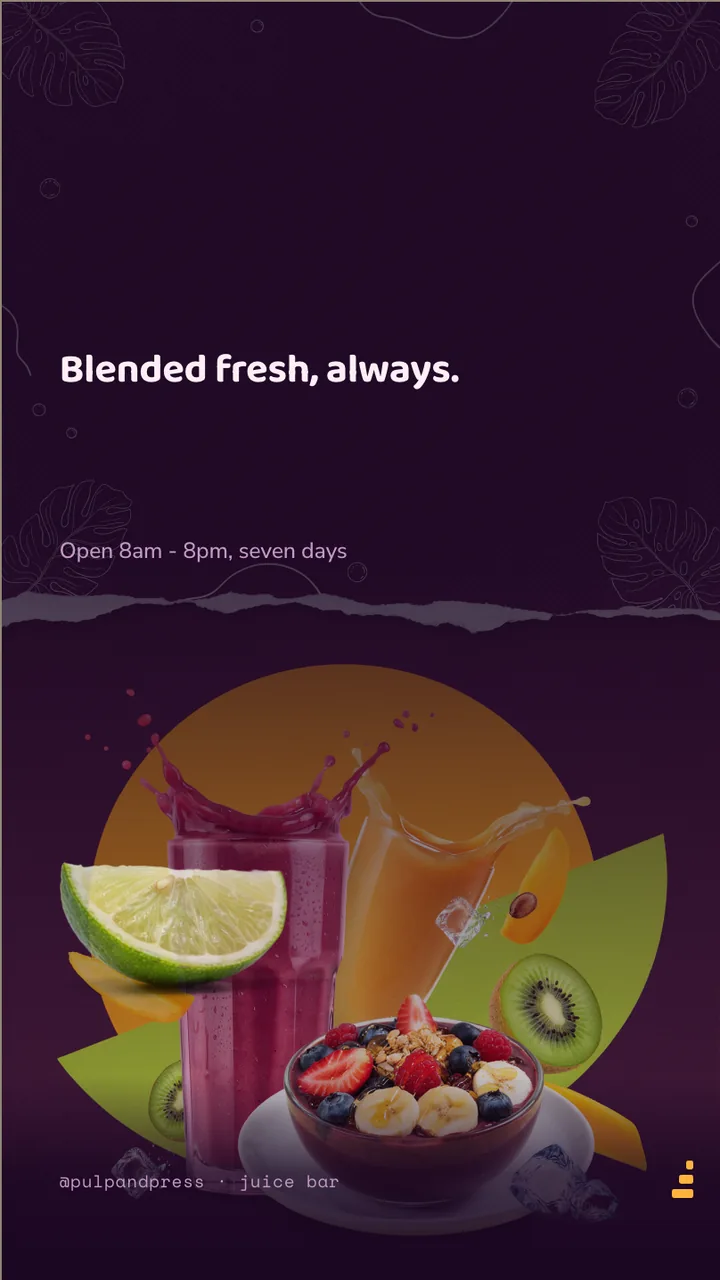
- Blended fresh, always.
- Open 8am - 8pm, seven days
- @pulpandpress · juice bar