Cafe happy hour offer board · Portrait Free restaurant & menu digital signage template
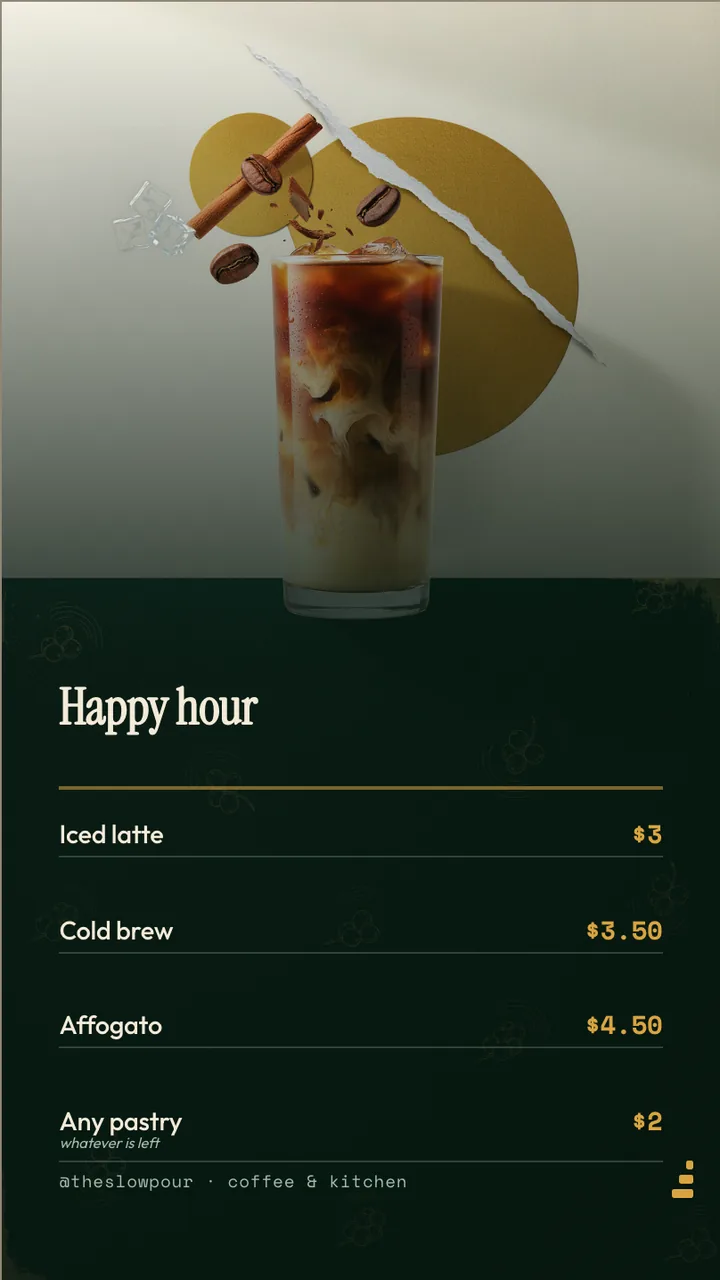
A cafe running an afternoon deal runs this on a TV stood on its end: the venue, the priced list, one offer and the hours.
A free vertical coffee shop offer board for any TV. Iced drinks and pastries at the quiet hours price, from three until six. Your first screen is free.
- By
- ChannelOS
- Slides
- 4
- Likes
- 0
- cafe
- happyhour
- offer
- coffee
- menu board
- digital signage
- restaurant
- portrait
Use this template, free
- 1 Create a free account and this template opens in your own workspace.
- 2 Change every word, price and photo in the editor, on a phone or a computer.
- 3 On the TV, open play.channelos.tv, pair it from your phone with the code it shows, then publish the board to it.
Every slide in this template
4 slides, rendered exactly as they air on a TV.
- 1
-
 2
2 -
 3
3 -
 4
4
Every word on these slides is text you can change
-
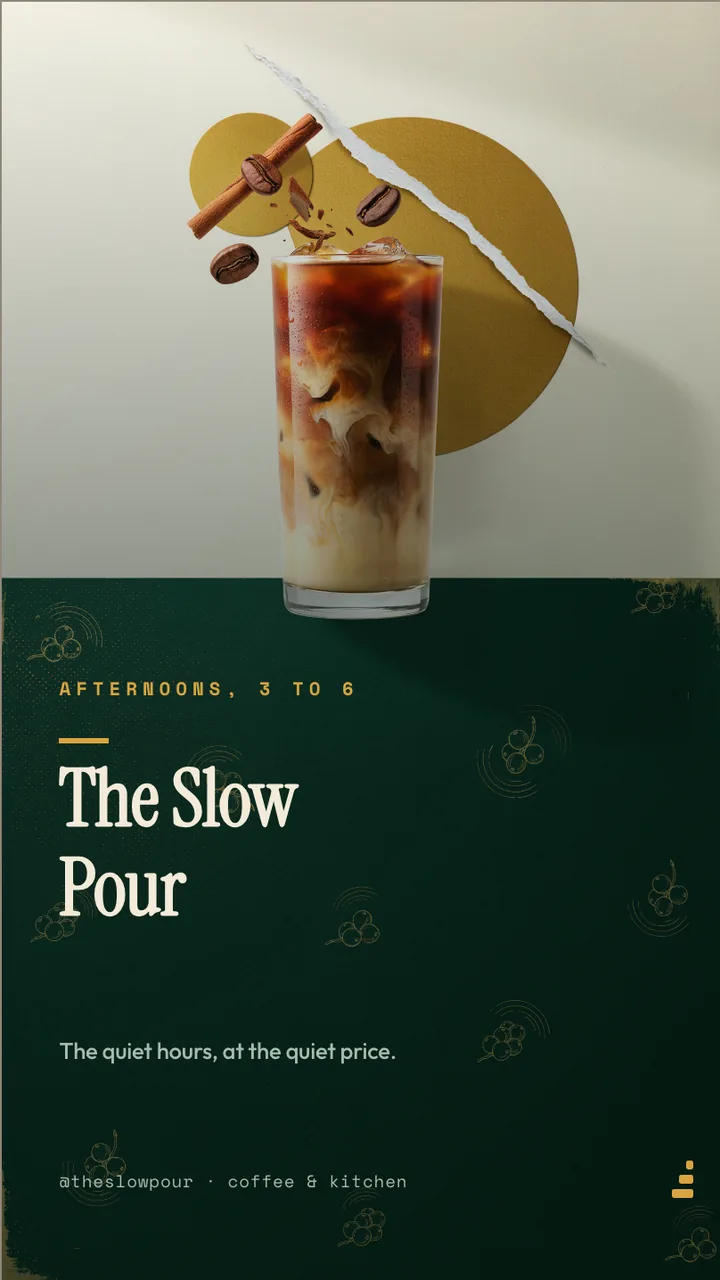
Slide 1
- Afternoons, 3 to 6
- The Slow Pour
- The quiet hours, at the quiet price.
- @theslowpour · coffee & kitchen
-
Slide 2
- Happy hour
- Iced latte
- $3
- Cold brew
- $3.50
- Affogato
- $4.50
- Any pastry
- $2
- whatever is left
- @theslowpour · coffee & kitchen
-
Slide 3
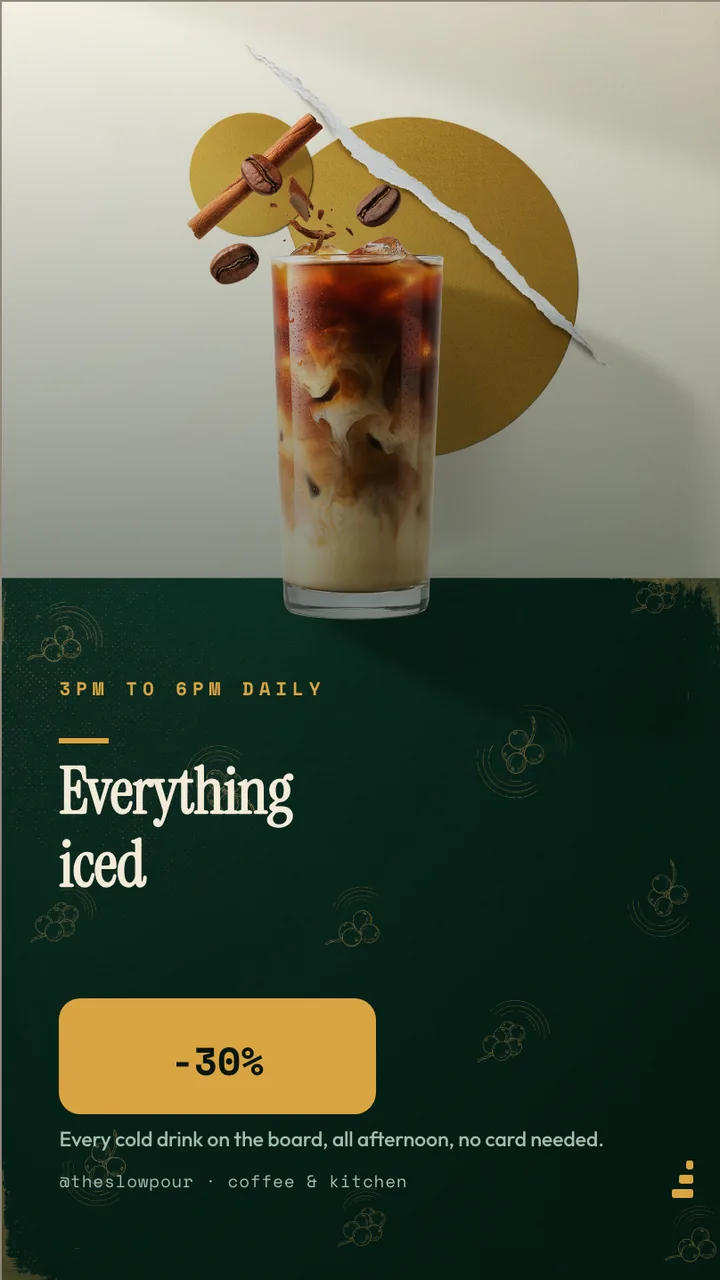
- 3pm to 6pm daily
- Everything iced
- -30%
- Every cold drink on the board, all afternoon, no card needed.
- @theslowpour · coffee & kitchen
-
Slide 4
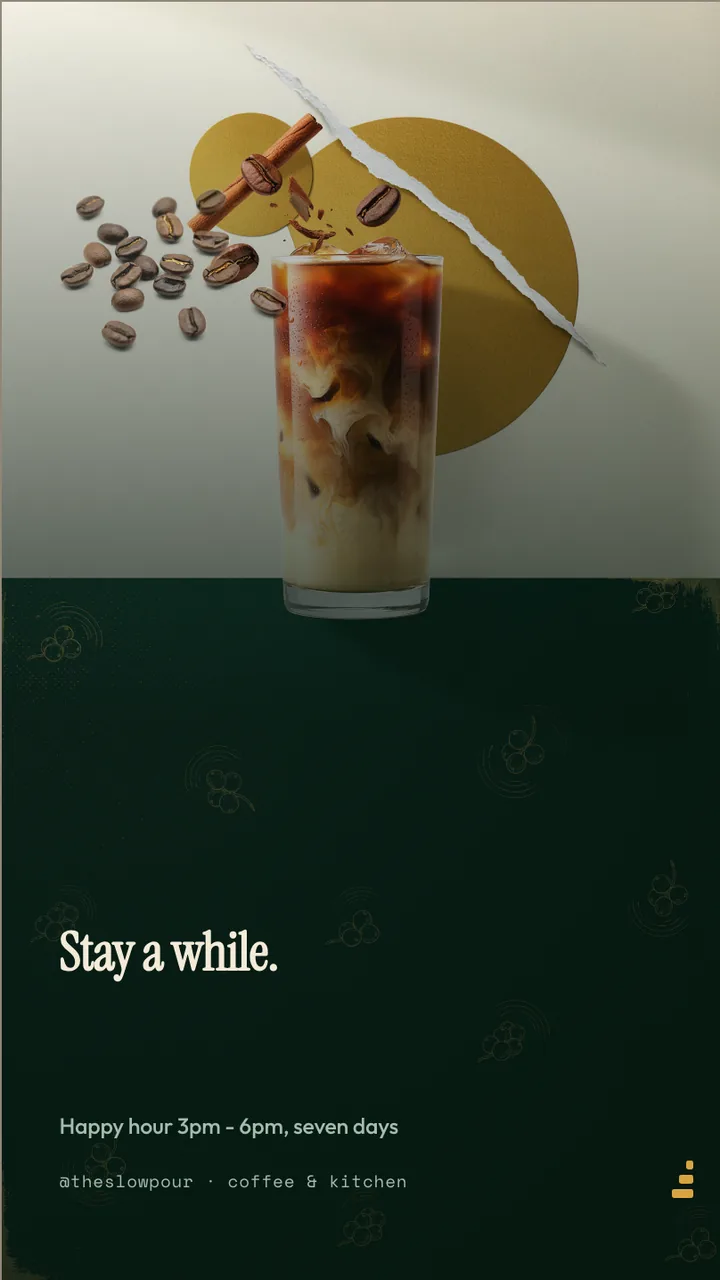
- Stay a while.
- Happy hour 3pm - 6pm, seven days
- @theslowpour · coffee & kitchen