Artisan bakery counter menu board · Portrait Free restaurant & menu digital signage template
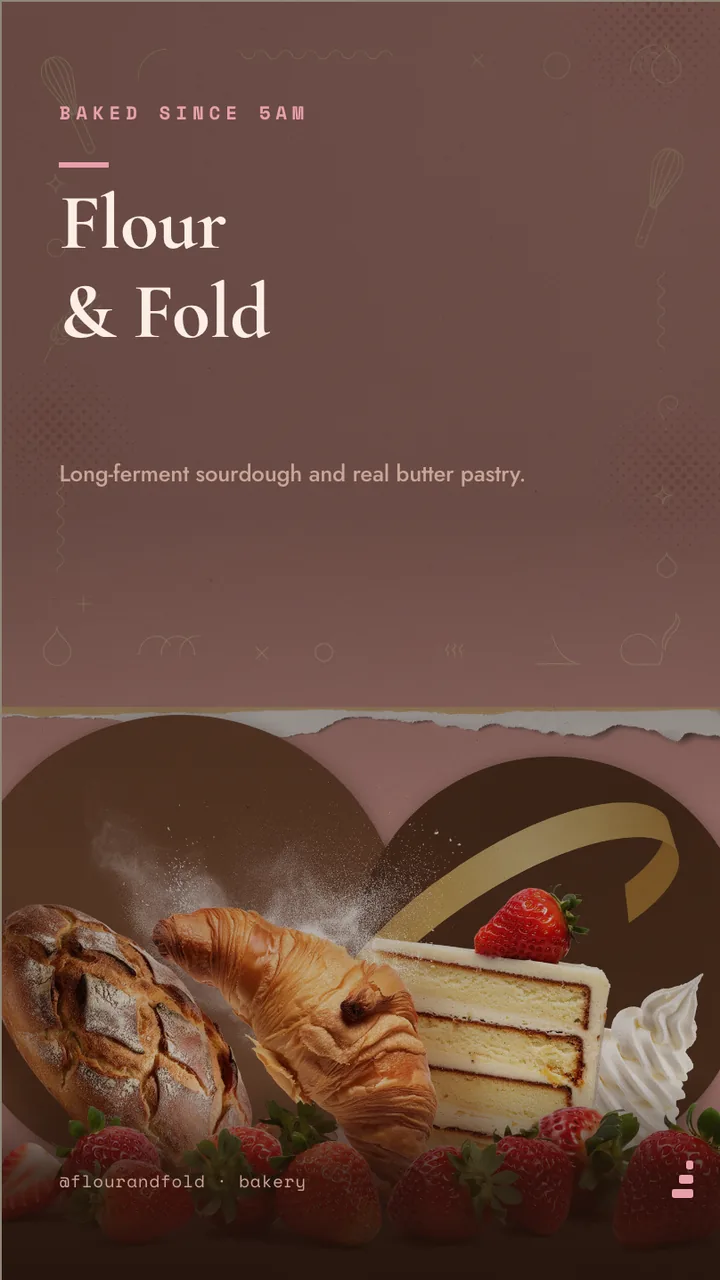
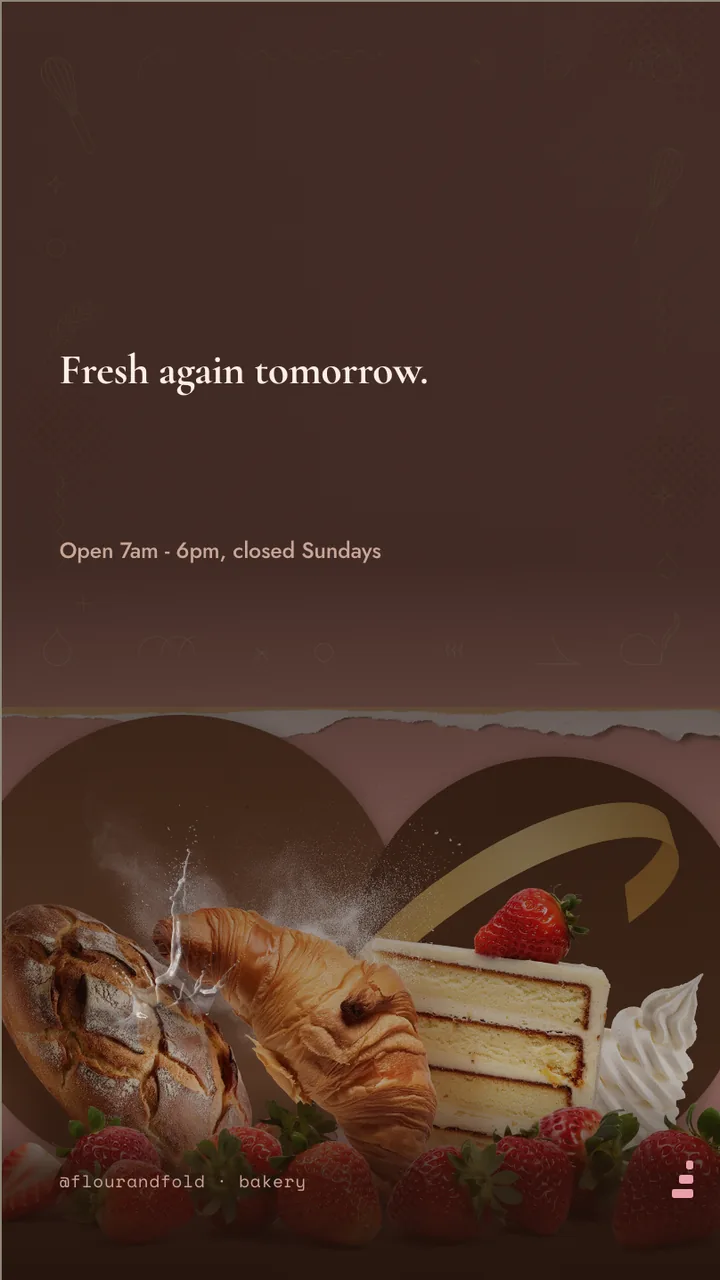
A bakery counter runs this on a TV stood on its end: the venue, the priced list, one offer and the hours.
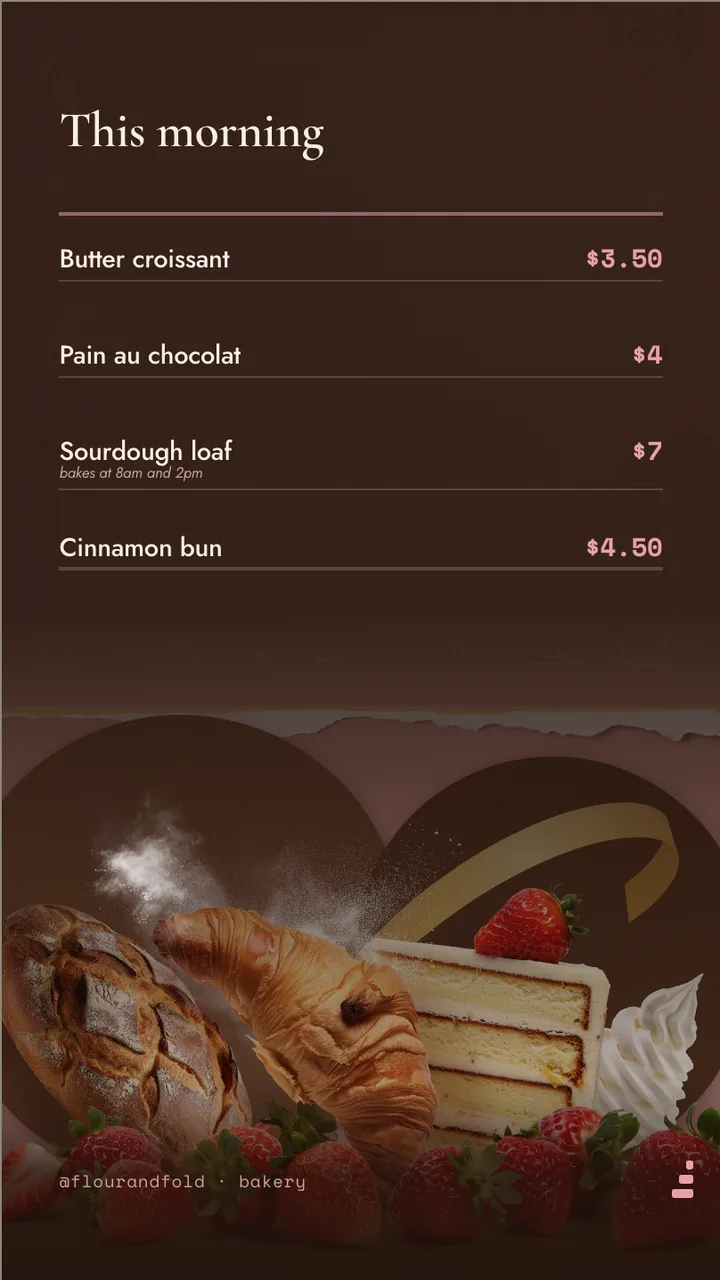
A free vertical bakery menu board for any TV. Croissants, pain au chocolat, sourdough and cinnamon buns, priced, with an end of day basket.
- By
- ChannelOS
- Slides
- 4
- Likes
- 0
- bakery
- pastry
- dessert
- menu
- menu board
- digital signage
- restaurant
- portrait
Use this template, free
- 1 Create a free account and this template opens in your own workspace.
- 2 Change every word, price and photo in the editor, on a phone or a computer.
- 3 On the TV, open play.channelos.tv, pair it from your phone with the code it shows, then publish the board to it.
Every slide in this template
4 slides, rendered exactly as they air on a TV.
- 1
-
 2
2 -
 3
3 -
 4
4
Every word on these slides is text you can change
-
Slide 1
- Baked since 5am
- Flour & Fold
- Long-ferment sourdough and real butter pastry.
- @flourandfold · bakery
-
Slide 2
- This morning
- Butter croissant
- $3.50
- Pain au chocolat
- $4
- Sourdough loaf
- $7
- bakes at 8am and 2pm
- Cinnamon bun
- $4.50
- @flourandfold · bakery
-
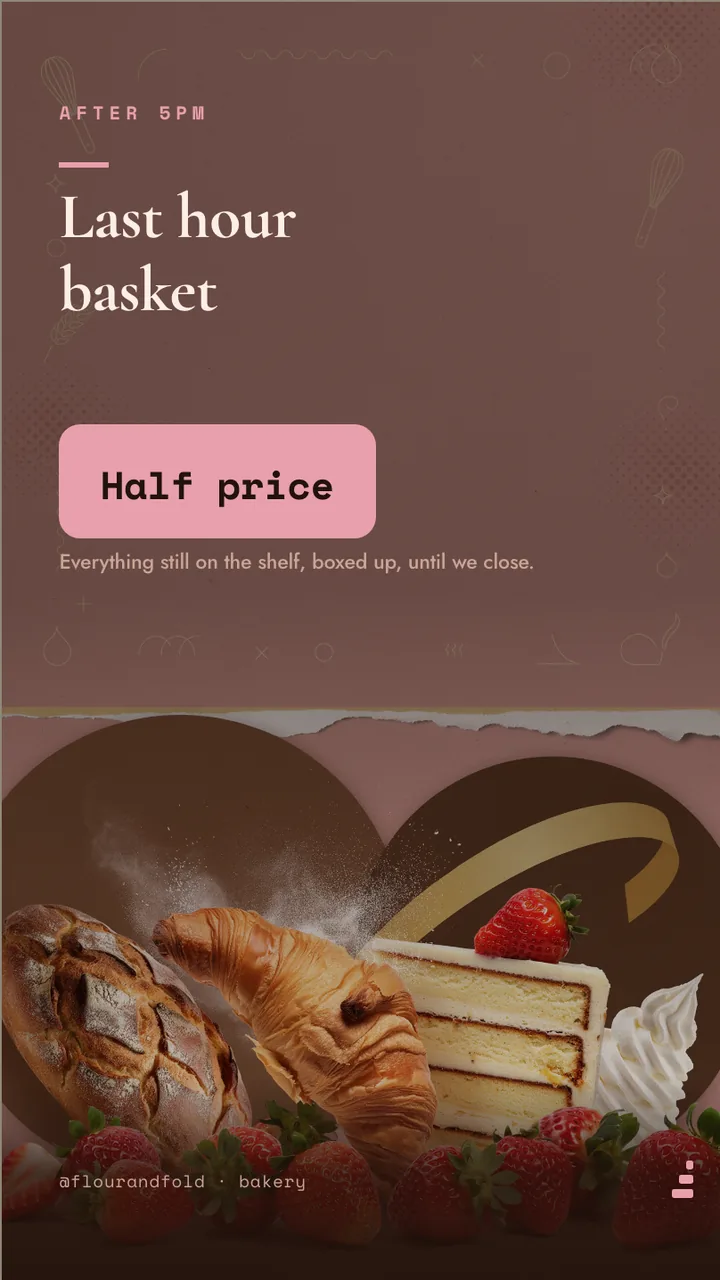
Slide 3
- After 5pm
- Last hour basket
- Half price
- Everything still on the shelf, boxed up, until we close.
- @flourandfold · bakery
-
Slide 4
- Fresh again tomorrow.
- Open 7am - 6pm, closed Sundays
- @flourandfold · bakery